


ARTIST |
Mayara Ferrâo |
TITLE |
Album of Deforgetfulness (The Wedding VI and The Kiss XI) |
YEAR |
2024 |
ARTIST’S COUNTRY OF ORIGEN |
Brazil |
DIMENSIONS |
N/A |
MEDIUM |
AI-generated image, inkjet print on cotton paper |
Created by Mayara Ferrâo, Courtesy of the artist and Verve Gallery
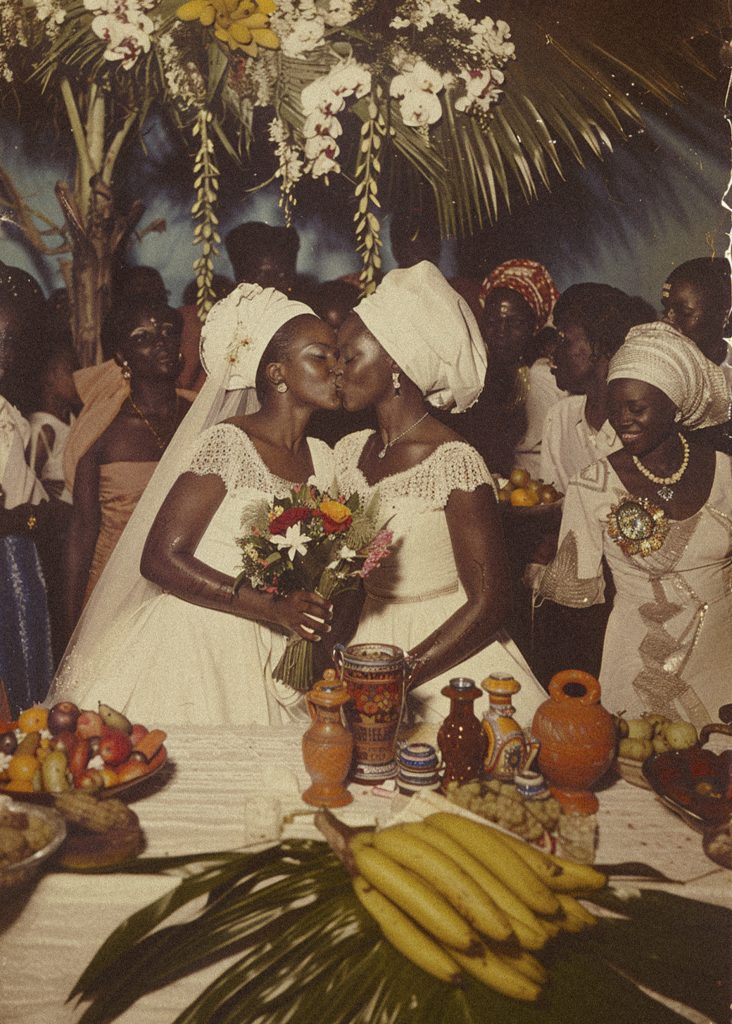
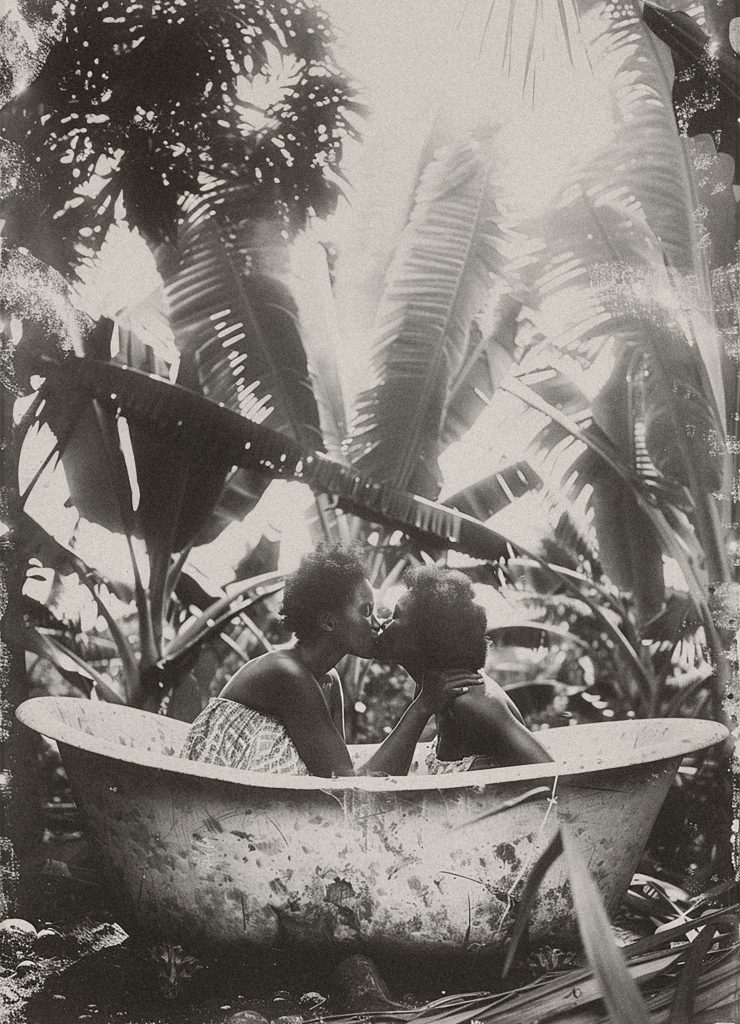
Mayara Ferrâo’s Album of Forgetfulness, 2024, stages an imaginative counter-archive: a speculative set of AI-generated photographs that envision not only possible futures but also free pasts. The Wedding VI and The Kiss XI present scenes of black women’s love in Brazil—images absent from historical records, and perhaps even unimaginable in their own time. By producing photographs of moments that never existed, Ferrâo challenges the systemic violence of erasure, offering instead glimpses of intimacy, joy, and celebration that resist the silences of colonial and patriarchal archives.
Ferrâo approaches artificial intelligence as both a poetic and a political tool. Drawing on public-domain colonial and postcolonial documents, institutional archives, and found vernacular images, she crafts textual prompts that AI translates into photographs. These are then reworked through overlays, textures, and collage, resulting in what she calls “reflected images”: pictures that echo historical aesthetics but are inflected with affection and desire. In her words, AI becomes an abebé—a ritual tool, a shield and weapon in Afro-Brazilian cosmology—bridging past and future while safeguarding identity and memory.
The banana plays a subtle yet decisive role in these works. In The Wedding VI, a bunch of bananas sits prominently among offerings on the table; in The Kiss XI, banana leaves envelop the embrace of two women in a bathtub. Rather than reinforcing exotic stereotypes, Ferrâo reclaims the banana as a marker of love and pride, embedding it within scenes of tenderness and belonging. These images reimagine the banana in Brazil not as a colonial commodity or caricature, but as part of a symbolic landscape where black women’s love is celebrated, visible, and central to the narrative of national identity.
