


ARTIST |
Erika NJ Allen |
TITLE |
Domestic Fallout - ONE - 1837-1901 |
YEAR |
2025 |
ARTIST’S COUNTRY OF ORIGEN |
Guatemala |
DIMENSIONS |
33.02 x 27.94 cm / 13 x 11 " |
MEDIUM |
Ceramic, Vintage Fenton Topaz Opalescent Hobnail Vaseline Glass Compote Dish with Uranium, 24-Karat Gold Luster |
Courtesy of the Artist
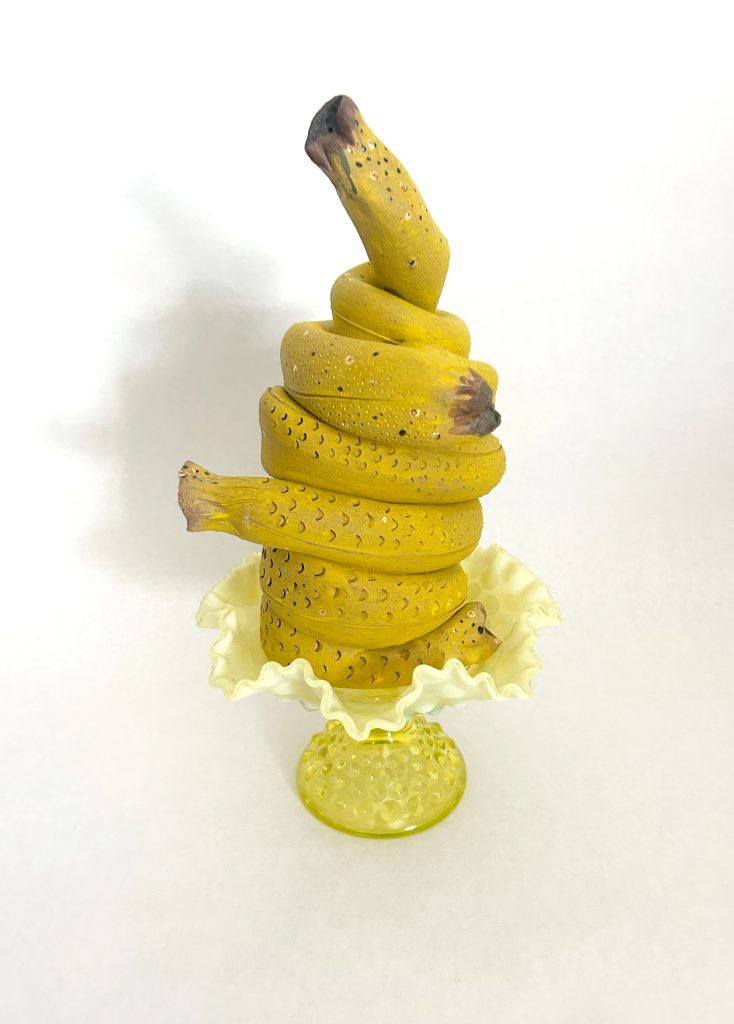
In Domestic Fallout – ONE – 1837-1901 (2025), Erika Nj Allen transforms the tableware of domestic comfort into a site of radioactive unease. A coiled ceramic banana, glazed in bright yellow and tipped with 24-karat gold luster, rises like a warning from a vintage uranium glass compote. The sculpture glows with a deceptive warmth—its beauty tinged with toxicity—mirroring the banana’s own history as both nourishment and instrument of exploitation. The work’s title evokes the Victorian years that saw the consolidation of global empires and the industrial infrastructures that later powered both colonial trade and nuclear warfare.
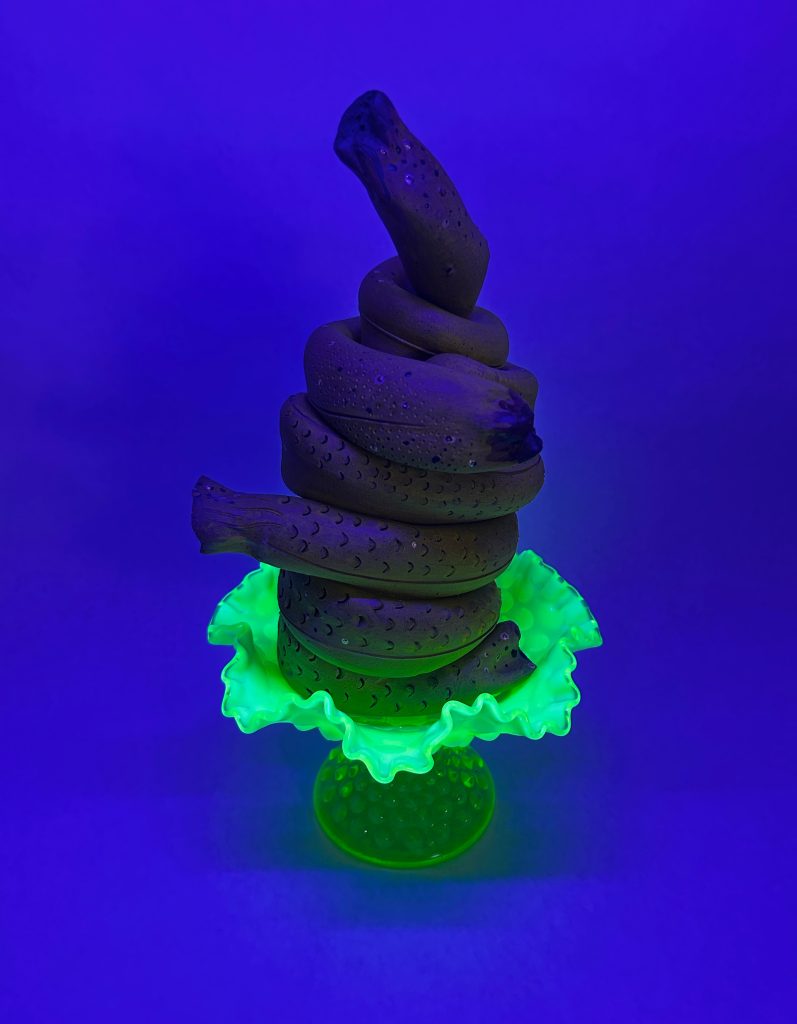
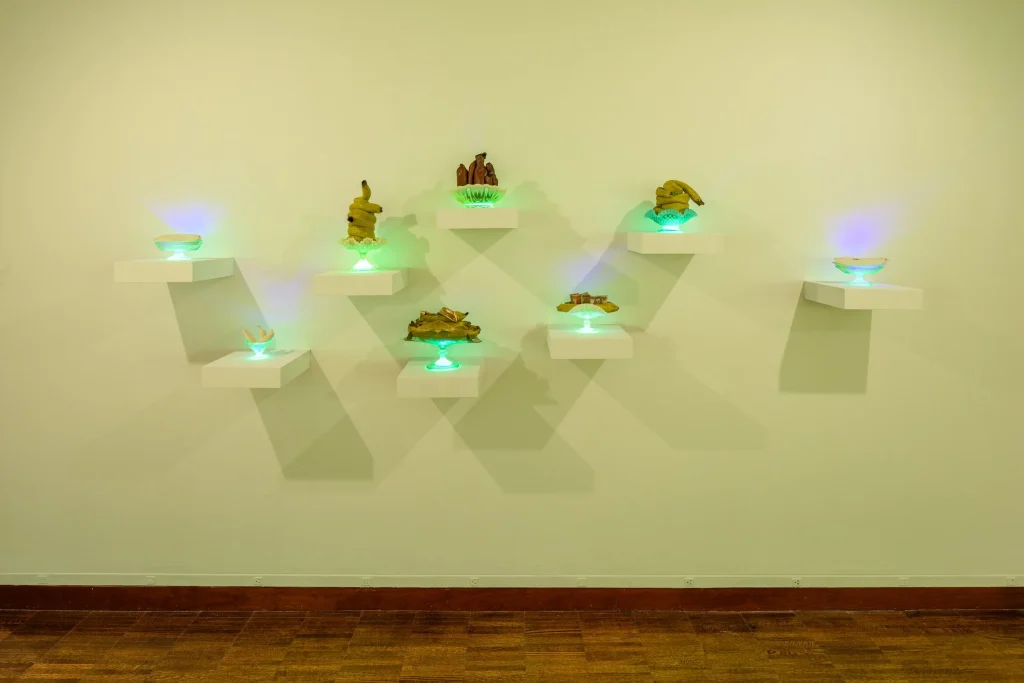
Part of an eight-piece installation, Domestic Fallout examines how extractive economies and imperial appetites have infiltrated the intimacy of the home. Nj Allen’s pairing of ceramic fruit and radioactive glass links the banana industry’s legacy of labor abuse, environmental devastation, and displacement with the militarized histories of uranium. The glowing vessels, once prized symbols of refinement, become silent witnesses to cycles of violence and consumption. Under black light, their fluorescence suggests a contaminated beauty—an afterglow of empire that continues to irradiate contemporary life.
By placing the banana within these charged vessels, Nj Allen reconfigures familiar objects as carriers of collective memory and ecological grief. The installation reimagines the domestic table as a theater of global consequence, where acts of serving and consuming are steeped in histories of power and migration. Domestic Fallout thus invites viewers to confront the seductive aesthetics of everyday life while acknowledging the invisible residues—radioactive, colonial, and emotional—that linger beneath their surface.
