


ARTIST |
Luis Gutierrez |
TITLE |
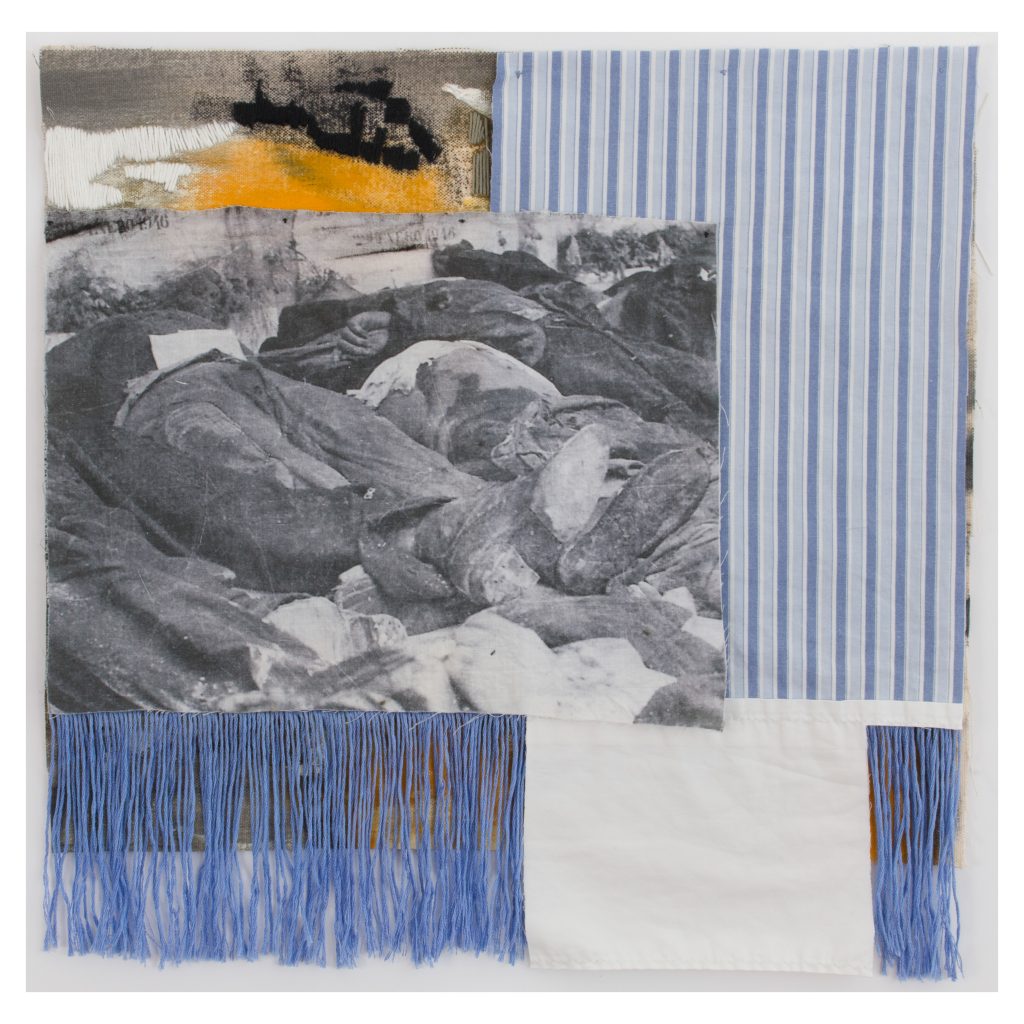
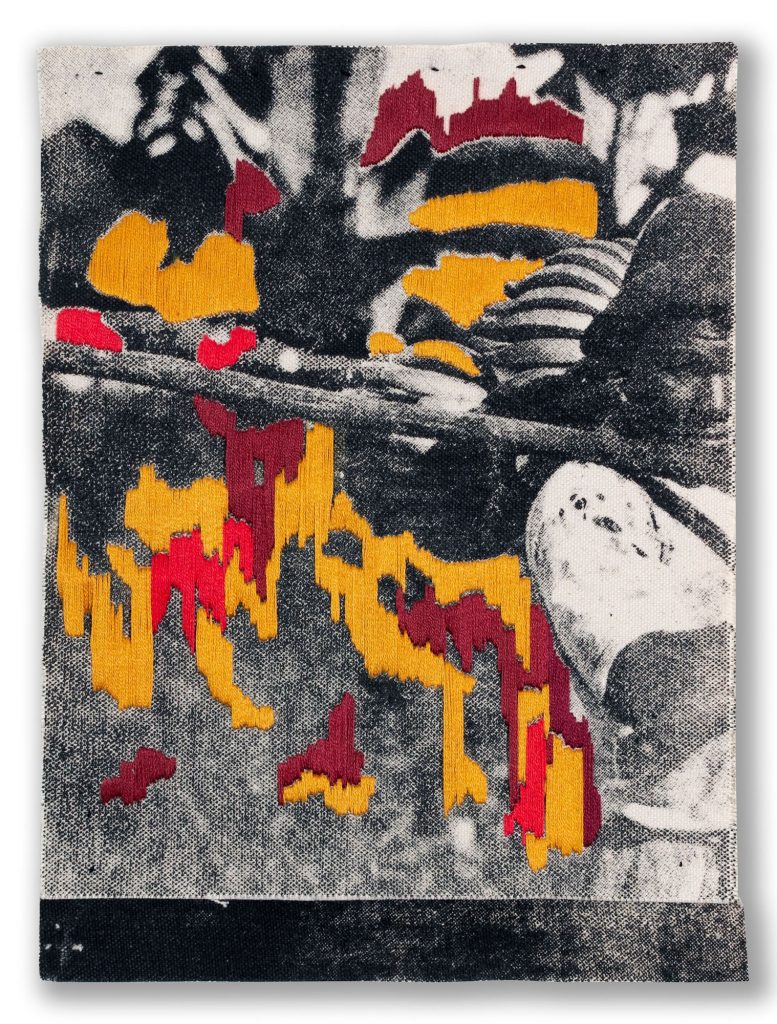
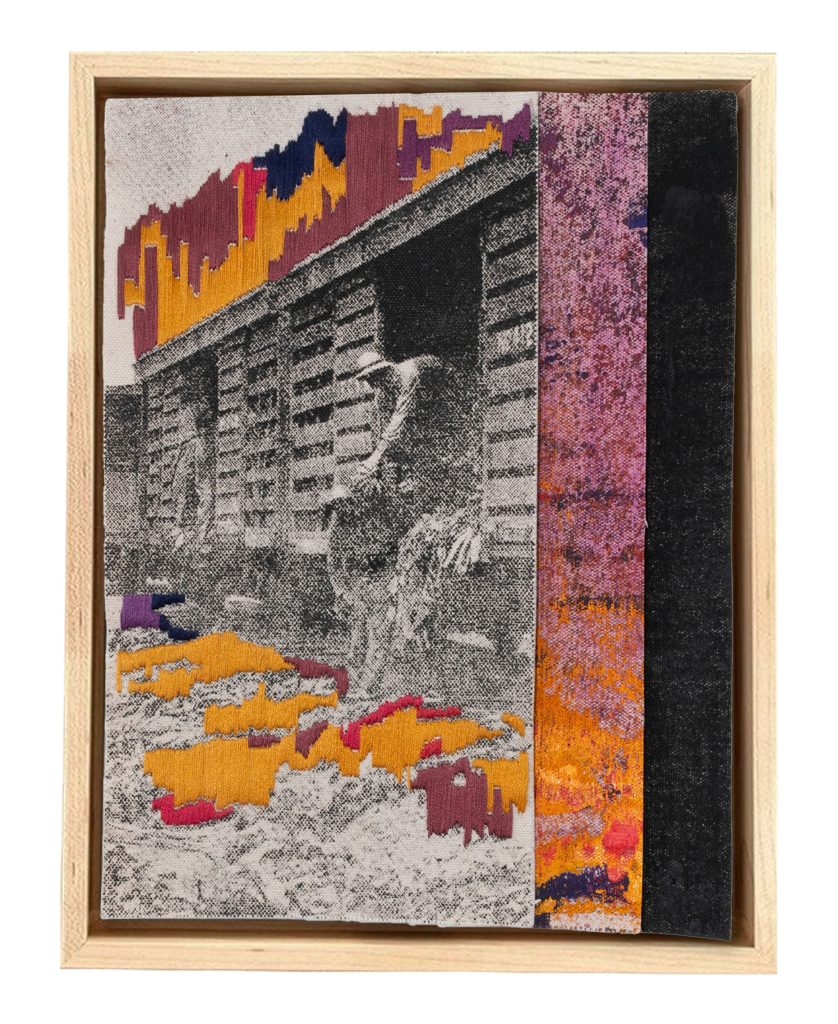
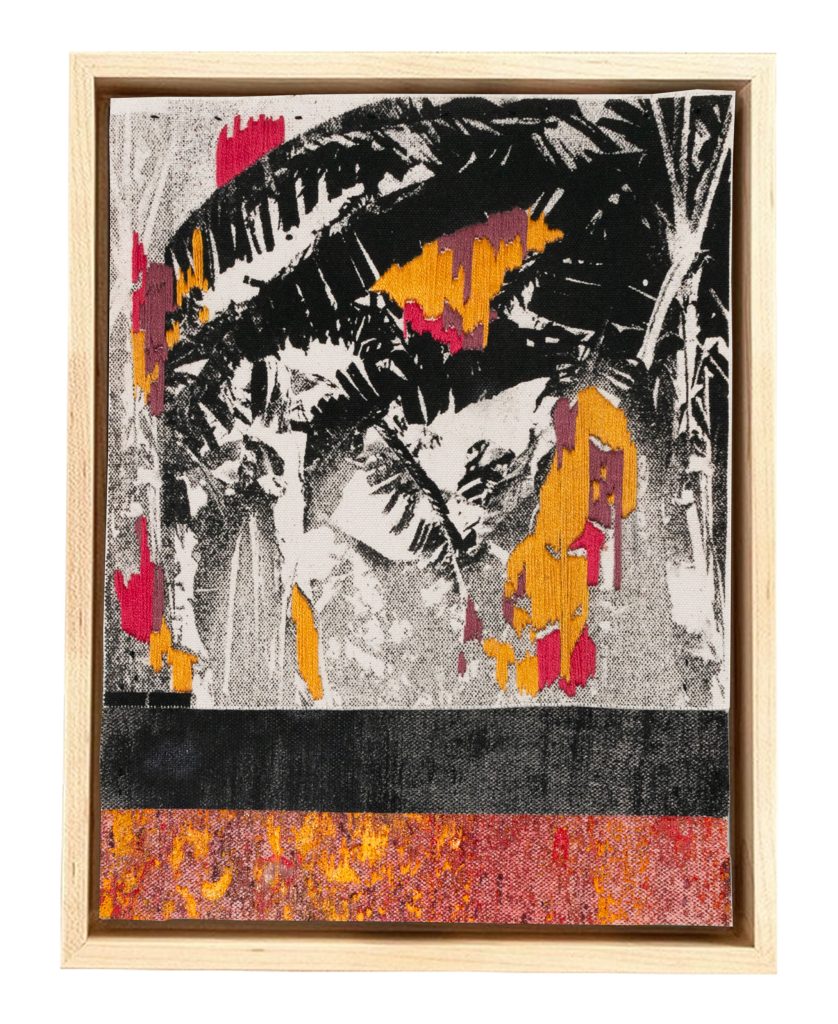
Entre Sombras The other works uploaded to his profile and part of this series are titled: “Cargando y descargando”, “Diciembre, 1928”, “El Trabajador”, “Las Hojas también lloran” |
YEAR |
2023 |
ARTIST’S COUNTRY OF ORIGEN |
Colombia |
DIMENSIONS |
Overall installation: 12” x 9” |
MEDIUM |
Oil, ink and embroidery floss on canvas |
Courtesy of the artist
In Señor Trabajador and its companion works, Luis Gutiérrez reanimates the fragmented visual record of Colombia’s banana zone, where the archives of labor, violence, and collective memory remain partial, damaged, or deliberately obscured. Working with oil, ink, and embroidery floss layered onto canvas, Gutiérrez enlarges and transforms historical photographs of plantation workers, railway cars, and the aftermath of the 1928 massacre. The black-and-white grain of the archival image becomes a structural backbone onto which he grafts bands of embroidered color—fiery reds, yellows, and purples that bleed across the frame. These chromatic interruptions signal not only artistic intervention but also the ruptures in historical narratives themselves: gaps where testimony was suppressed, where the lives of workers and their families were relegated to footnotes in the broader story of corporate expansion and state violence.
The banana plantation is never directly depicted through fruit in this series, but its presence saturates every scene. The workers leaning against boxcars, the bodies piled on makeshift ground, the glimpses of infrastructure allude to a landscape organized around the rhythms of banana production. Gutiérrez approaches archival images not as fixed documents but as unstable containers of memory—objects that have themselves aged, decayed, and lost information over time. Through embroidery, he physically sutures these histories back together, using thread as both line and wound. The tactile nature of the stitches introduces a corporeal dimension: labor—domestic, manual, and artistic—accretes onto the surface of the image, insisting on the humanity that the original photographs, often taken through the lens of exploitation, were never meant to foreground.
Across the series, Gutiérrez experiments with how textile and photographic languages collide. In Diciembre, 1928, fabric surrounds the archival image rather than intervening within it, creating a room-like enclosure that heightens the claustrophobic gravity of the scene. In El Trabajador, by contrast, the embroidery infiltrates the image from within, destabilizing the photograph’s authority as the threads overtake the printed grain. Such variations underscore the artist’s interest in the instability of history—how stories morph, how archives fail, how memory is rebuilt through touch, color, and intuition. By reworking these images of banana workers, Gutiérrez not only confronts the legacy of the Banana Massacre but also proposes an ethics of care for the past: a way of stitching what has been severed, transforming archival silence into a generative act of remembrance.
