


ARTIST |
Bony Ramirez |
TITLE |
La Mancha de Plátano |
YEAR |
2022 |
ARTIST’S COUNTRY OF ORIGEN |
Dominican Republic |
DIMENSIONS |
121.92 x 121.92 cm / 48 x 48 " |
MEDIUM |
Acrylic, color pencil, soft oil pastel, silver marker, artist’s worn tanktop, Bristol paper on wood panel |
Courtesy of the artist
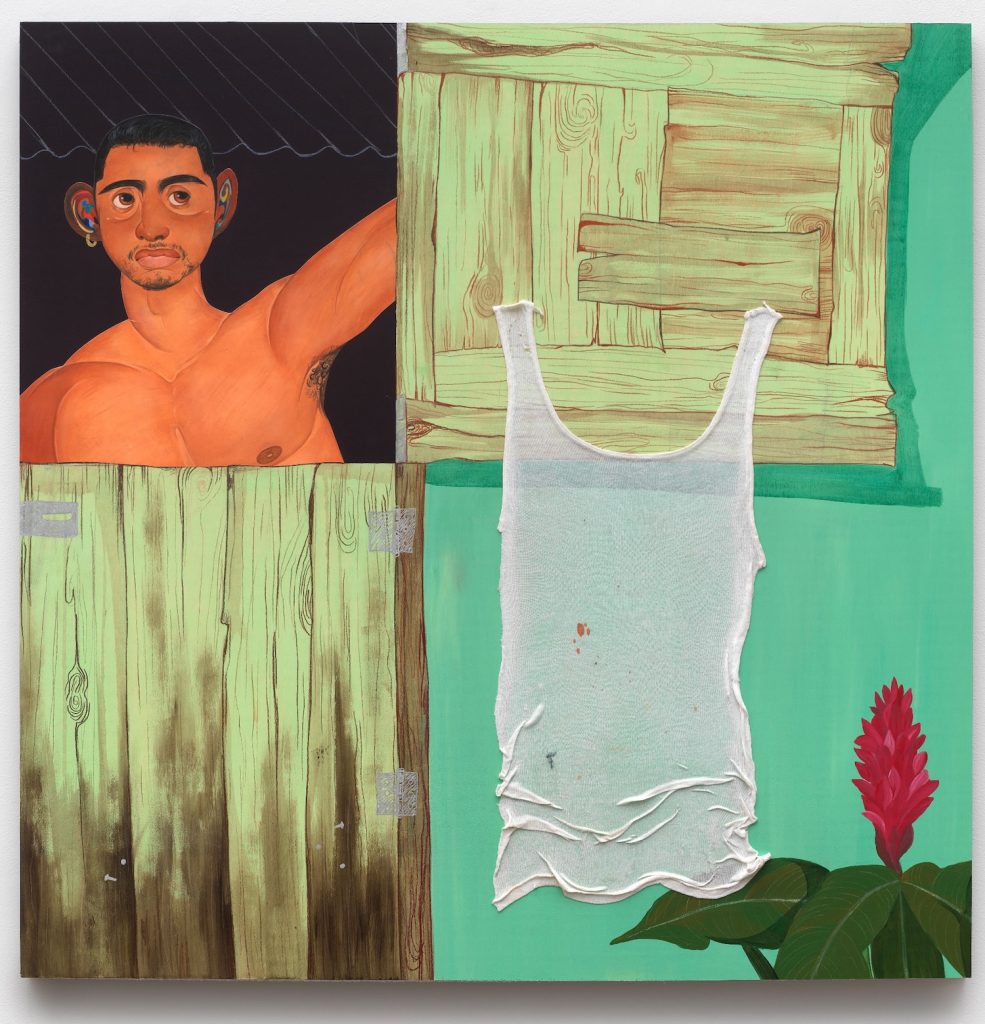
In La Mancha de Plátano (2022), Dominican artist Bony Ramírez fuses painting and found material to evoke the embodied traces of labor that often go unseen. A real, worn tank top—marked by time and use—is affixed to the surface of the painting, interrupting the meticulously rendered scene of a plantation worker framed by the wooden planks of his home. The tactile presence of the fabric collapses the distance between representation and reality: it is not just an image of work, but its residue. The title refers to the sticky, darkening sap of the banana plant, a substance that stains skin and cloth alike, leaving indelible marks of toil.
Ramírez transforms this everyday saying—“you have to be careful with the banana stain”—into a meditation on class, visibility, and pride. In Dominican popular speech, the phrase can signal both warning and belonging, an index of labor and identity. Here, the “stain” becomes a metaphor for the persistence of the working body within systems that erase it. By inserting his own shirt into the work, the artist identifies himself with those whose manual effort sustains economies and cultural narratives yet remains undervalued. The surface of the painting, like the shirt, carries traces of friction, sweat, and survival.
Through this hybrid gesture, La Mancha de Plátano bridges the world of the plantation and the world of art, suggesting that both are structured by parallel forms of exploitation. Ramírez’s visual language—flat planes of color, stylized anatomy, and embedded materials—anchors a broader critique of how labor is aestheticized, consumed, and commodified. What begins as a portrait of a worker expands into a self-portrait of resistance, where the artist reclaims the stain as a mark of dignity: a declaration that to bear its trace is to belong, to endure, and to insist on being seen.
