


ARTIST |
Joel Gaitan |
TITLE |
Banana I; Banana II |
YEAR |
2025 |
ARTIST’S COUNTRY OF ORIGEN |
Nicaragua, USA |
DIMENSIONS |
I: 13.97 x 73.66 x 17.78 cm / 5.5 x 29 x 7 ". Banana II: 39.37 x 73.66 x 17.78 cm / 15.5 x 29 x 7 " |
MEDIUM |
Clay, glaze, underglaze, gold luster, fabric, wood panel |
Courtesy of the Artist
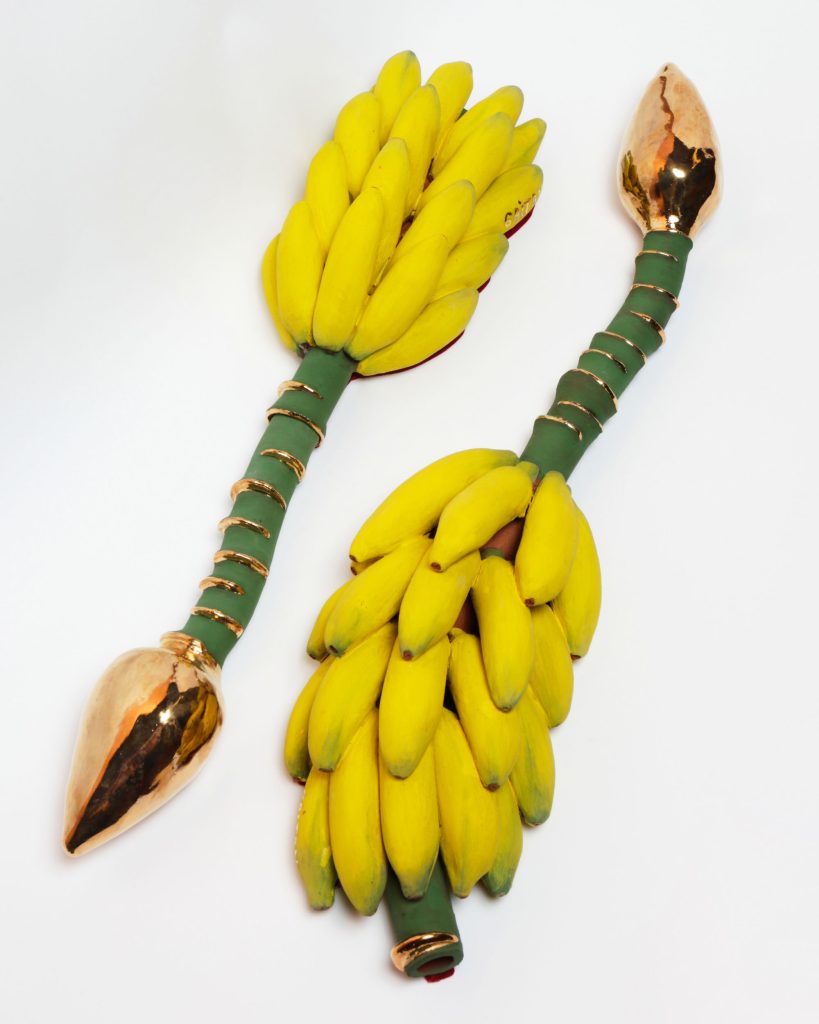
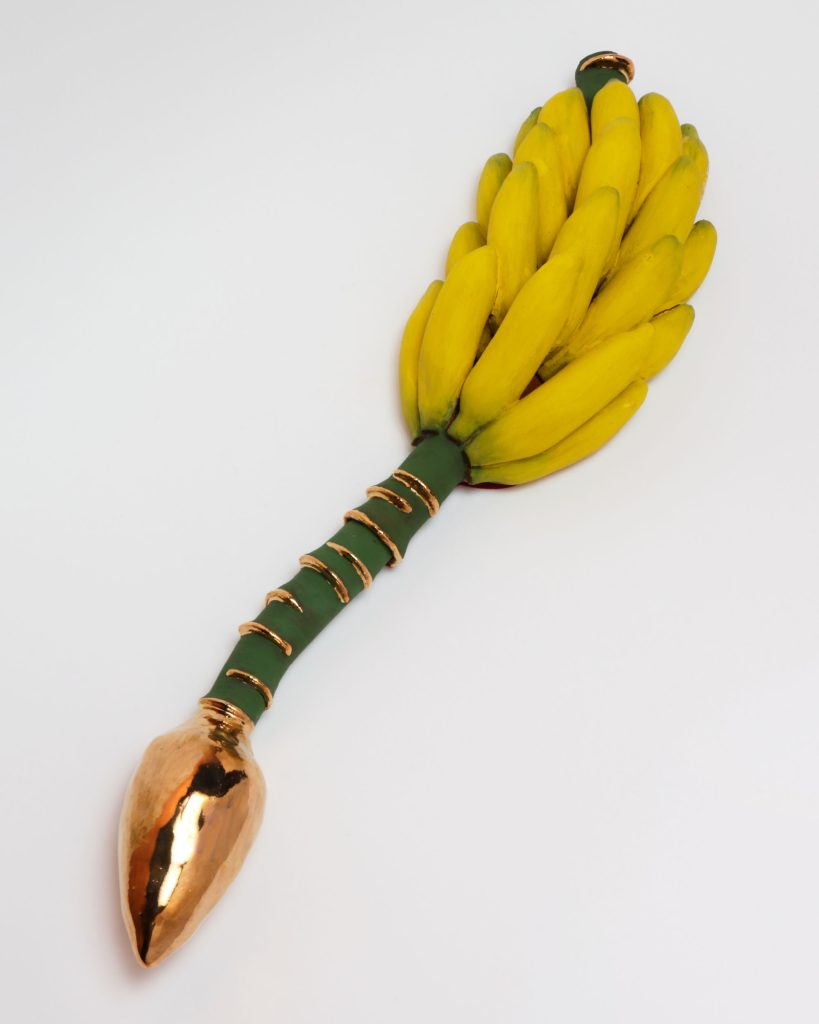
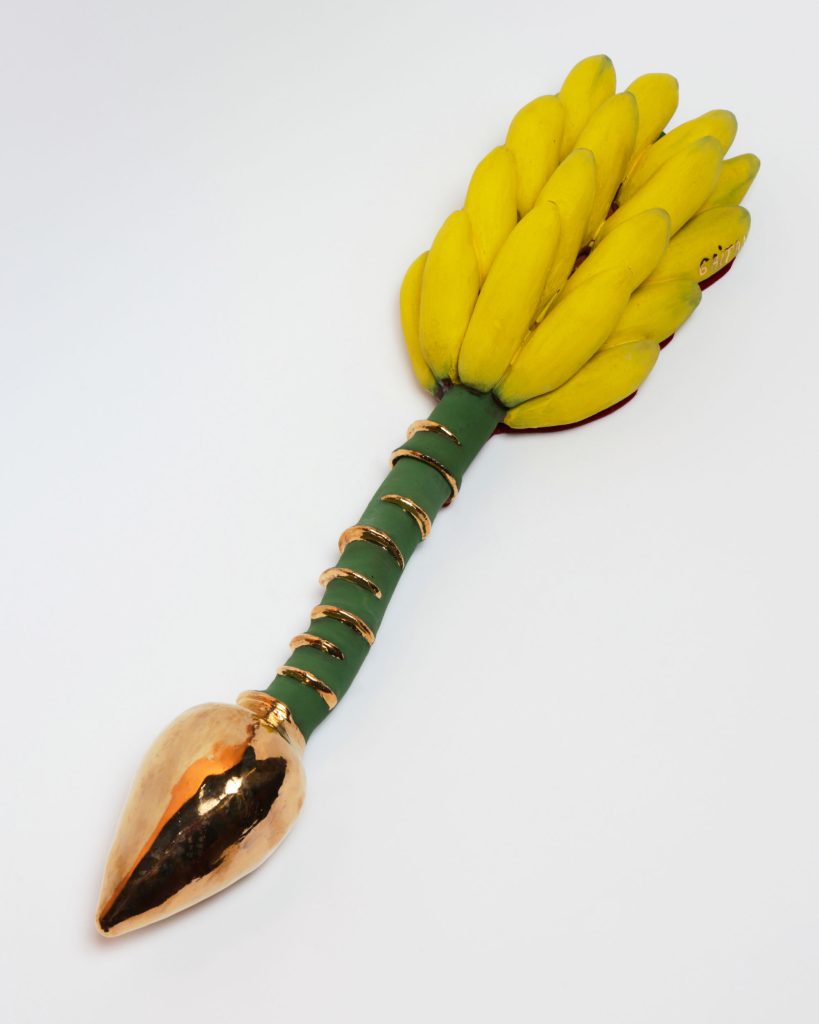
In Banana I and Banana II, Joel Gaitan extends his exploration of Nicaraguan and Central American visual lineages through the tactile, symbolic, and ritual potential of ceramics. Known for his deeply personal engagement with ancestry, queer identity, and the devotional dimensions of craft, Gaitan approaches clay as both medium and offering. The two banana clusters, rendered with vivid glaze, gold luster, and meticulously sculpted forms, echo the artist’s ongoing effort to preserve hand-building traditions that have endured despite centuries of colonial suppression. By elevating the banana—a fruit intimately tied to Central American history—into an object of reverence, Gaitan creates a bridge between ancestral knowledge and contemporary queer aesthetics.
The bananeros’ hybrid construction—part clay, part textile, part wooden armature—embodies Gaitan’s interest in how objects shift in meaning once “immortalized” through material and display. In museum contexts, bodies, vessels, and organic forms are celebrated for their voluptuousness and craftsmanship, even as similar bodies or identities are marginalized outside institutional walls. Gaitan has remarked that his ceramic vessels “represent big bodies,” asking viewers to confront the gap between institutional admiration and social prejudice. Here, the banana bunches echo that dynamic: lush, sensual, humorously oversized, and gilded, they command space with a presence that is both opulent and tender.
Gaitan’s Pentecostal upbringing subtly threads itself into the work’s symbolic register. In many Pentecostal teachings, bananas function as metaphors for purity, spiritual growth, or collective expansion—analogies that become lovingly refracted through the artist’s queer and diasporic lens. By transforming the fruit into luminous ceremonial objects, Gaitan reclaims and reconfigures those religious narratives, offering them back as gestures of lineage, pride, and self-definition. Banana I and Banana II thus operate simultaneously as devotional sculptures, diasporic meditations, and playful assertions of queer embodiment within a broader history of Central American material culture.
