


ARTIST |
Samantha Nalini Box |
TITLE |
Portable Homelands #7 |
YEAR |
2024 |
ARTIST’S COUNTRY OF ORIGEN |
Jamaica, USA |
DIMENSIONS |
121.92 x 121.92 x 121.92 cm / 48 x 48 x 48 " |
MEDIUM |
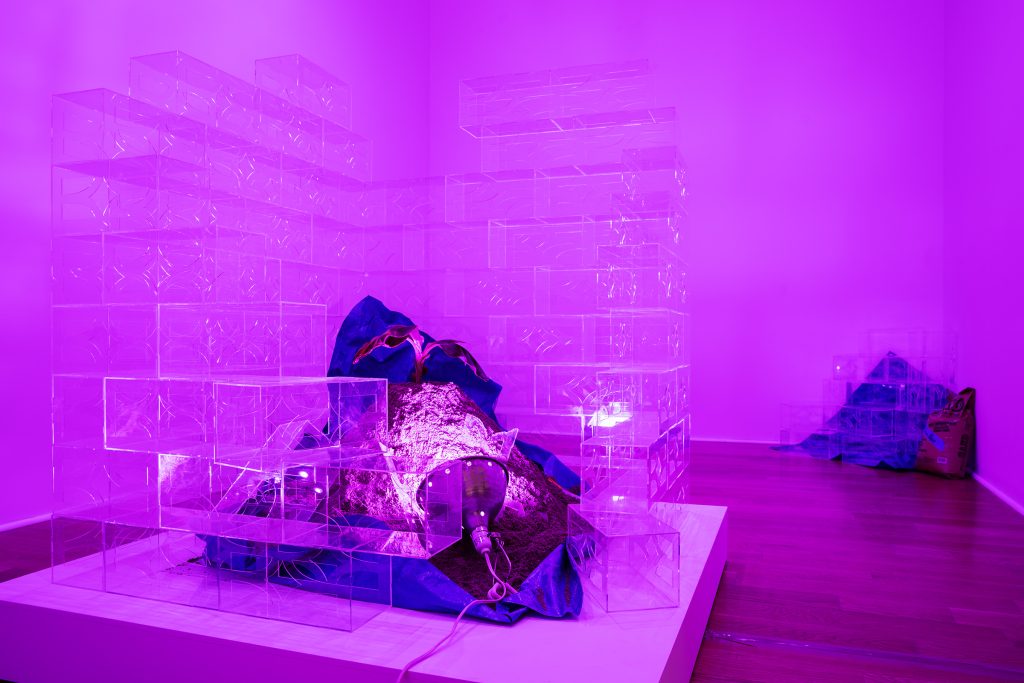
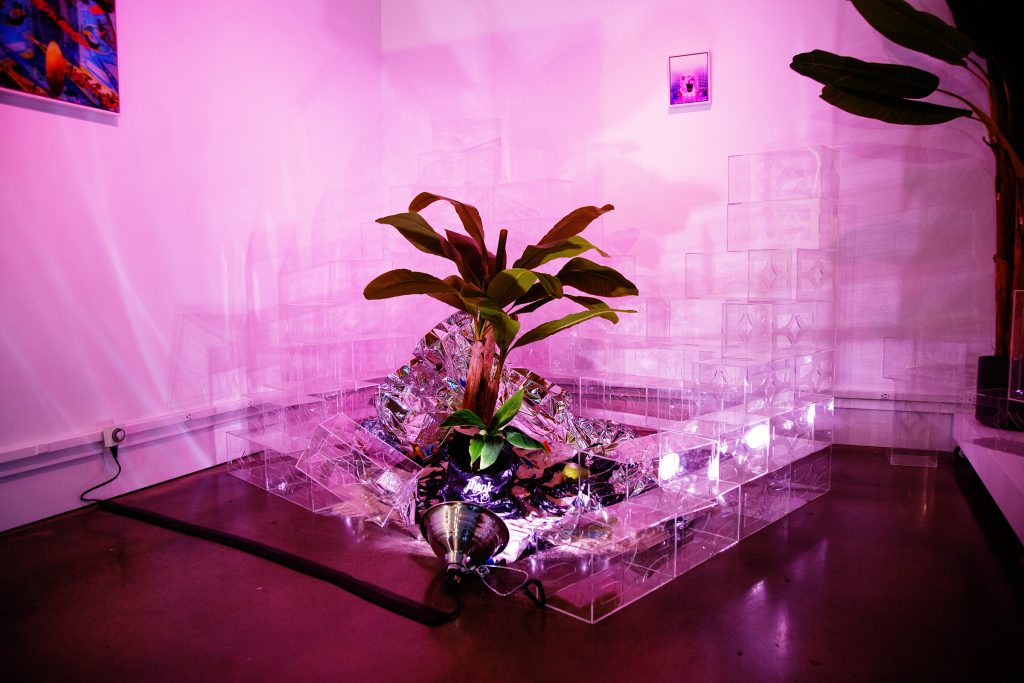
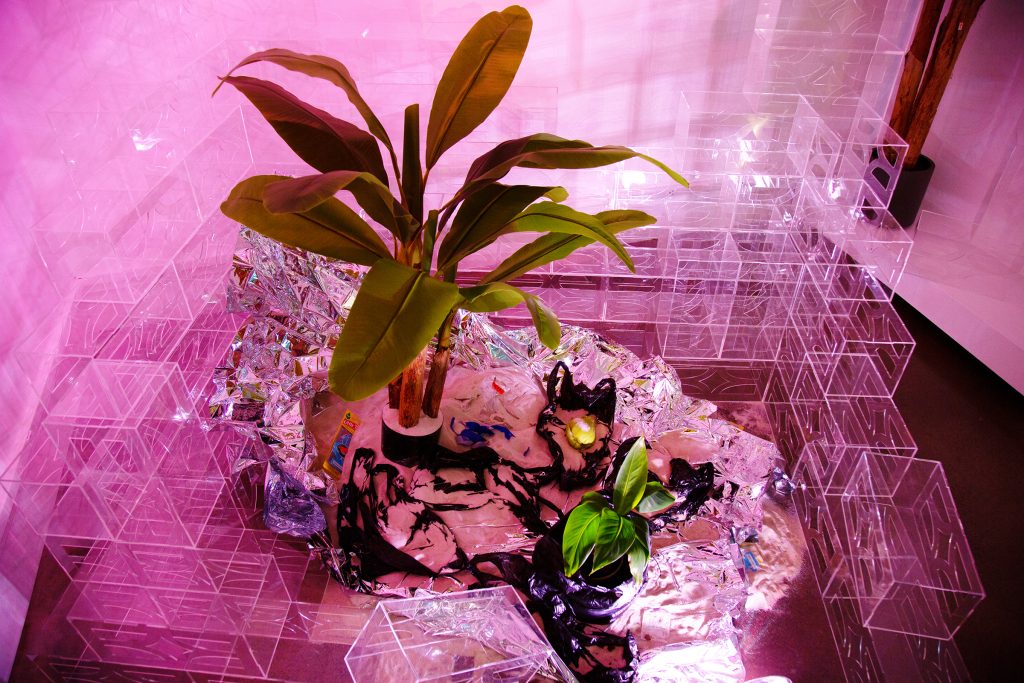
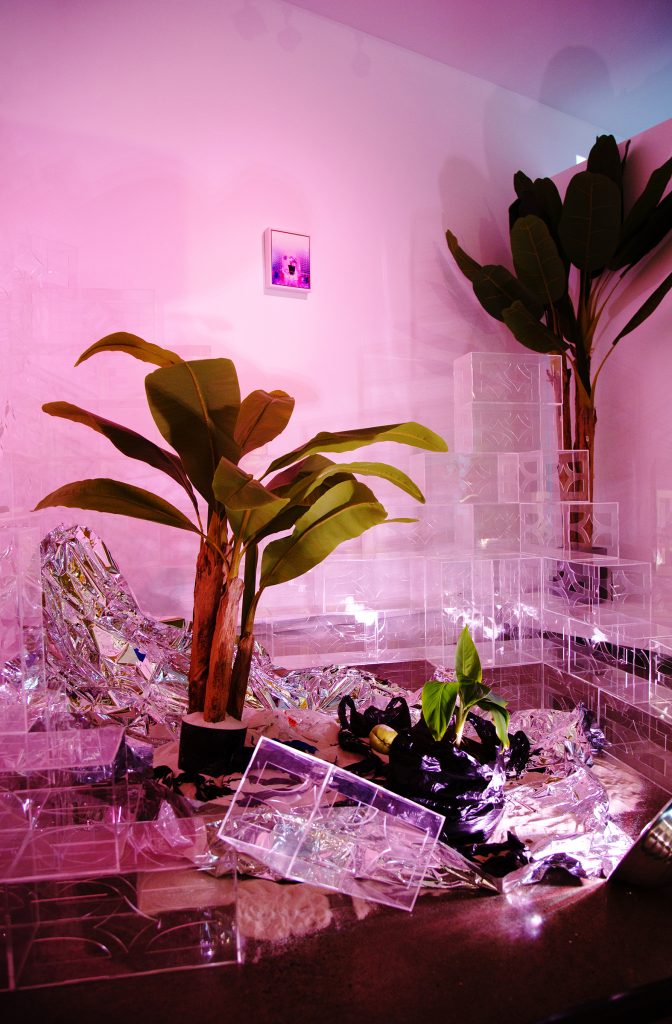
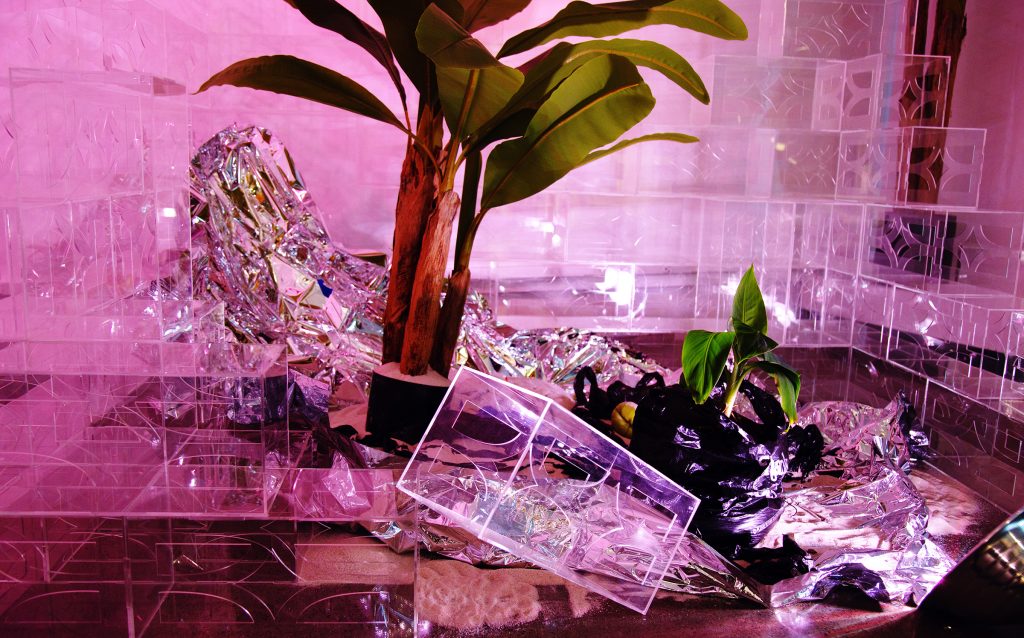
Banana tree potted in soil, sand, acrylic bricks, growlights, museum wax |
Courtesy of the Artist
In Portable Homelands #7 (2024), Samantha Nalini Box constructs a glowing, fabricated micro–banana greenhouse that reflects the layered experience of diaspora—how memory, longing, and cultural identity become both preserved and commodified in transit. Encased in a modular structure of transparent acrylic bricks and bathed in the magenta hue of grow lights, the young banana plant becomes a symbol of displacement made portable, nurtured artificially rather than by the tropical soil it once called home. Box, who emigrated from Jamaica to New Jersey as a child, speaks of how her distance from the Caribbean sharpened her understanding of it: the Bronx, not Flatbush, became the unexpected vantage point from which she could critically re-examine the textures of her homeland.
Box’s background in documentary photography—particularly her long-term photographic project at Sylvia’s Place, an emergency shelter for homeless LGBTQ youth—permeates the installation through an ethics of care, witnessing, and embodiment. Portable Homelands #7, part of the larger “Caribbean Dreams” series, situates Caribbean foods such as bananas, yuca, and other tropical produce as “objects in motion,” circulating through global currents of trade, extraction, and desire. For Box, these foods track histories of forced and indentured labor, charting the movement of bodies across oceans and time. By placing the banana plant in an artificial, museum-lit terrarium, she underscores the tension between organic ancestral life and the constructed environments that sustain diasporic identities far from home.
The work also engages art-historical lineages, particularly Dutch still lifes, whose depictions of exotic fruits and luxury goods were tightly intertwined with colonial wealth and global extraction. By referencing this canon, Box inserts herself—as a Black Caribbean woman—into a visual tradition that has long excluded artists of her gender and race. The glowing, jewel-like installation becomes both homage and critique: a meditation on who gets to author images of abundance, whose histories are preserved in aesthetic form, and how diasporic subjects create their own portable homelands when the original one is out of reach. Exhibited in different configurations across venues, Portable Homelands #7 remains a mutable, luminous shrine to the tensions of memory, mobility, and belonging.
