


ARTIST |
Eblin Grueso |
TITLE |
Si Defiendo el Territorio |
YEAR |
2021 |
ARTIST’S COUNTRY OF ORIGEN |
Colombia |
DIMENSIONS |
Variable dimensions |
MEDIUM |
Wood, canvas, banana plant, soil |
Courtesy of the artist
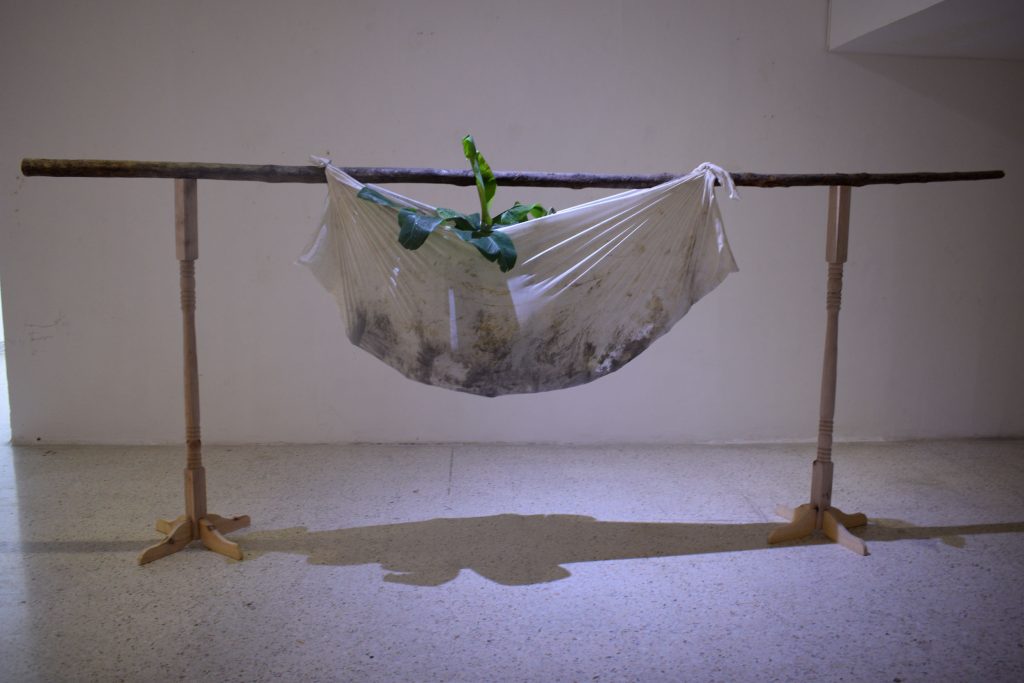
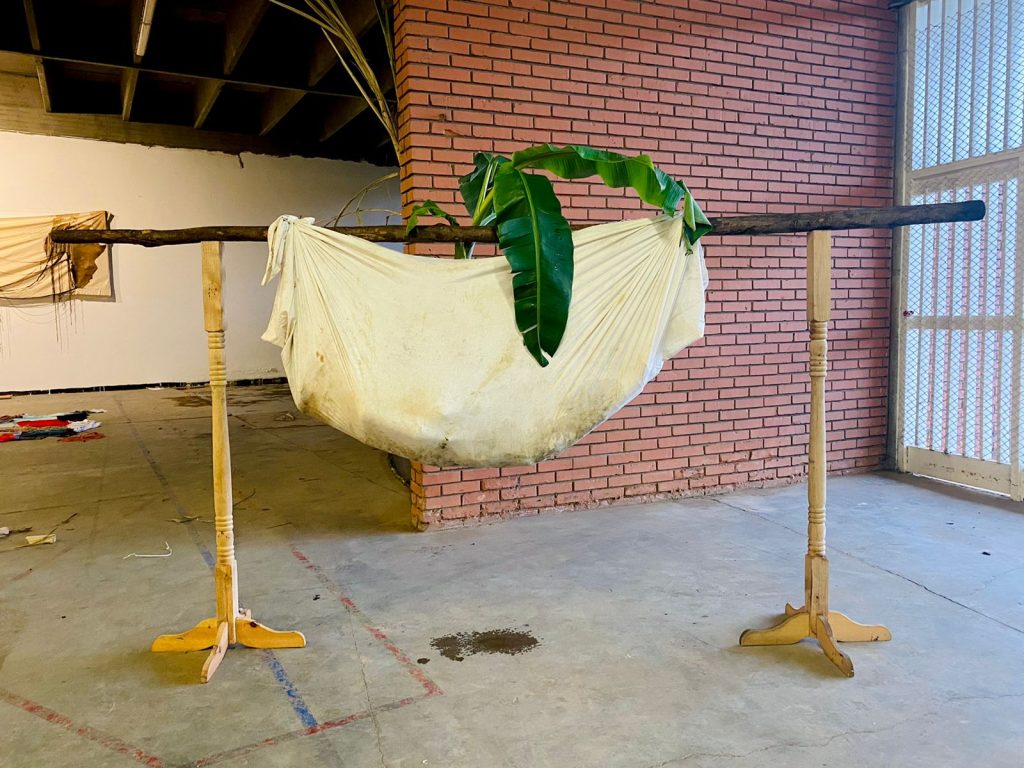
In Si Defiendo el Territorio (2021), Eblin Grueso stages a banana plant within a suspended cloth sling, invoking the charged symbology of the carguero: the funerary carrying cloth traditionally used to transport the dead across rural Colombian territories. The work immediately establishes a tension between life and death, growth and disappearance. The young banana plant—rooted in soil yet deprived of sun, water, and the open ground—appears both vital and precarious. Its placement inside a dirt-stained canvas transforms the plant into a surrogate body, a figure vulnerable to the same extractive and violent forces that Grueso seeks to confront through his practice as an Afro-Colombian peasant artist.
Drawing from the Instagram text by Isabel Cristina Díaz Moreno, the installation insists on the specificity of the lives whose deaths often become abstracted into anonymous statistics or faceless “auras.” The carguero evokes the intimate labor of those who must carry lifeless bodies—mothers, sisters, neighbors, and friends—through territories marked by colonial histories, paramilitary conflict, land dispossession, and extractivist economies. By placing a living plant where a human body would normally lie, Grueso disrupts the expected narrative: the banana plant becomes a stand-in not to anonymize the dead, but to make visible the ongoing entanglement between territory, violence, and the struggle for survival. The installation demands that viewers confront the structural forces that render certain bodies expendable.
The white, coldly lit gallery heightens the work’s dissonance. Both the banana plant and the carguero sling appear displaced, uprooted from the rural landscapes where such imagery carries deep communal resonance. Suspended just above the ground, the plant hovers between worlds—a gesture that echoes Catholic notions of the separation of the soul from the earth to which it belongs, as well as the liminal condition of Afro-Colombian territories threatened by environmental degradation and cultural erasure. In bringing something alive into a vessel associated with mourning, Grueso exposes the fragility of life in contested territories while affirming the resilient, grounded presence of Afro-Colombian communities who continue to defend their land, memory, and right to remain rooted.
