


ARTIST |
María Antonia Méndez |
TITLE |
Musa x paradisiaca, fotografía negra |
YEAR |
2018-2021 |
ARTIST’S COUNTRY OF ORIGEN |
Colombia |
DIMENSIONS |
Variable dimensions |
MEDIUM |
Black and white photography |
Courtesy of the artist
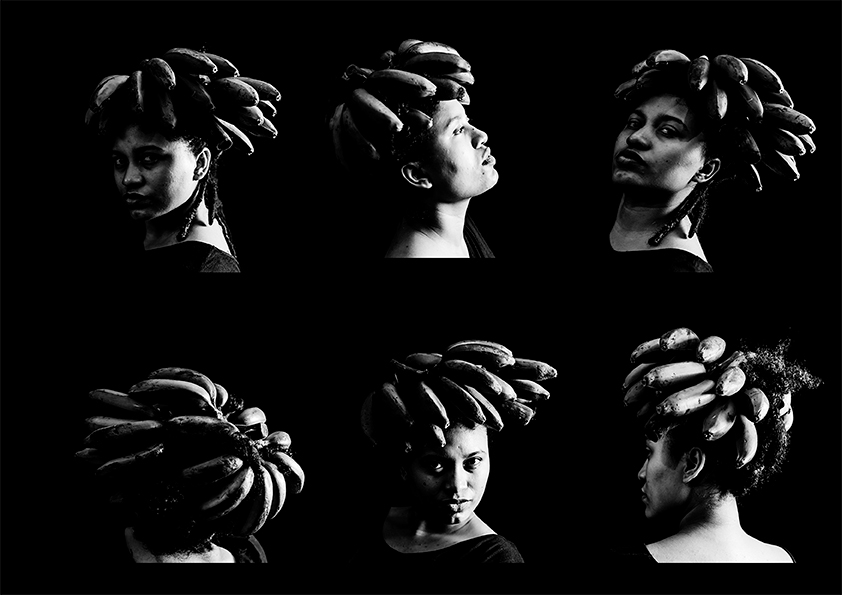
In Musa x paradisiaca, fotografía negra (2018-2021), María Antonia Méndez turns self-portraiture into a method of inquiry—an embodied way of tracing how Blackness is perceived, negotiated, and imagined within the everyday spaces of diasporic life. Wearing bunches of bananas as sculptural headdresses, she stages a series of chiaroscuro portraits that oscillate between adornment, burden, and signal. The fruit—so long implicated in racialized and colonial visual regimes—becomes a device that both reveals and destabilizes habitual ways of looking. Through these gestures, Méndez probes the delicate threshold between hypervisibility and erasure that often shapes the experience of Afro-descendant communities in Latin America and its diasporas.
The series emerges from the artist’s sustained observations in Mexico City’s La Merced Market, where fleeting interactions, misrecognitions, and half-encounters sparked a deeper reflection on who is seen, how, and under what assumptions. Musa x paradisiaca, fotografía negra extends this autoethnographic search: each photograph becomes a speculative archive of the micro-dynamics of recognition, kinship, and estrangement that unfold in market aisles shaped by migration, food economies, and long histories of Afro-diasporic circulation. The banana operates as a visual trigger whose meanings remain unsettled—activating racialized associations even as the artist disrupts them by claiming her own image and its narrative possibilities.
Drawing from the “dark” aesthetic of culinary photography, Méndez constructs a visual language in which the body becomes raw material, surface, and site of resistance. Her self-representation as a human-plant hybrid resists linear storytelling, instead proposing a form of cross-pollination between gesture, shadow, and inquiry. Musa x paradisiaca, fotografía negra shows how racial imaginaries persist in the mundane and how they can be reworked through self-fashioning and photographic experimentation. The result is a quietly radical meditation on Black presence, diasporic belonging, and the everyday afterlives of botanical and colonial entanglements.
