


ARTIST |
Minia Biabiany |
TITLE |
Musa |
YEAR |
2020 |
ARTIST’S COUNTRY OF ORIGEN |
Guadeloupe |
DIMENSIONS |
Variable Dimensions |
MEDIUM |
Video HD with sound |
Courtesy of the Artist
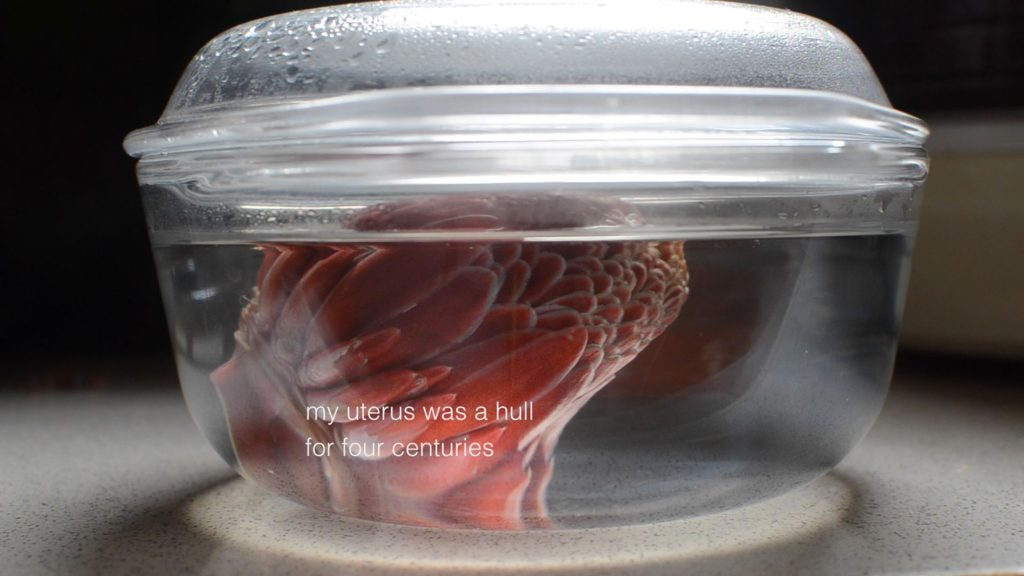
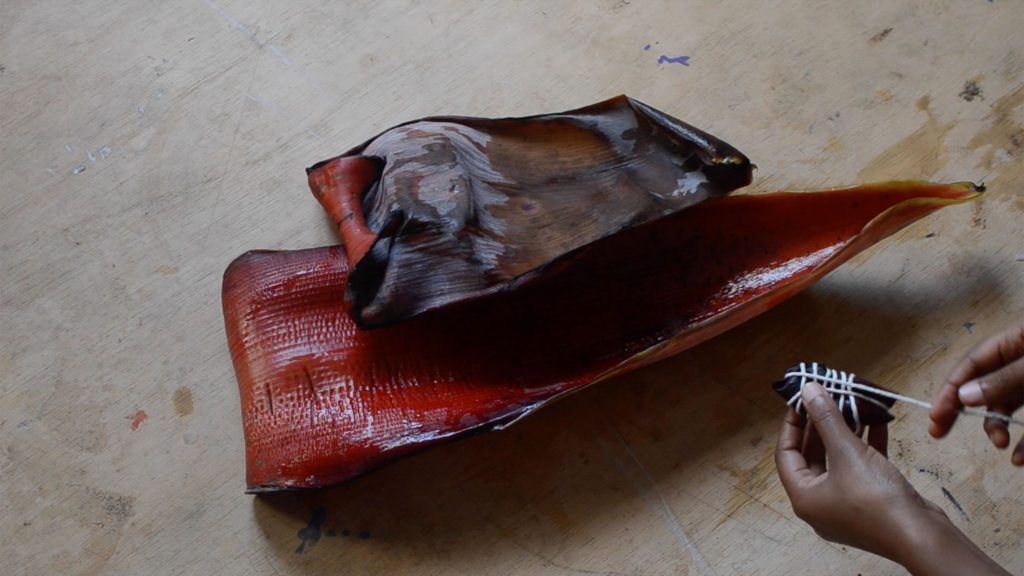
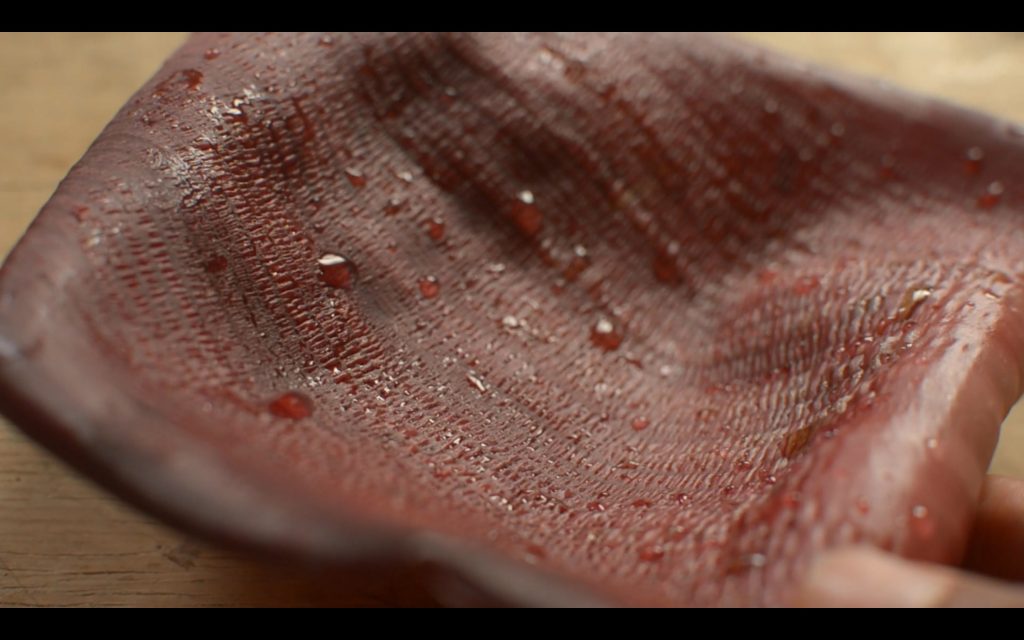
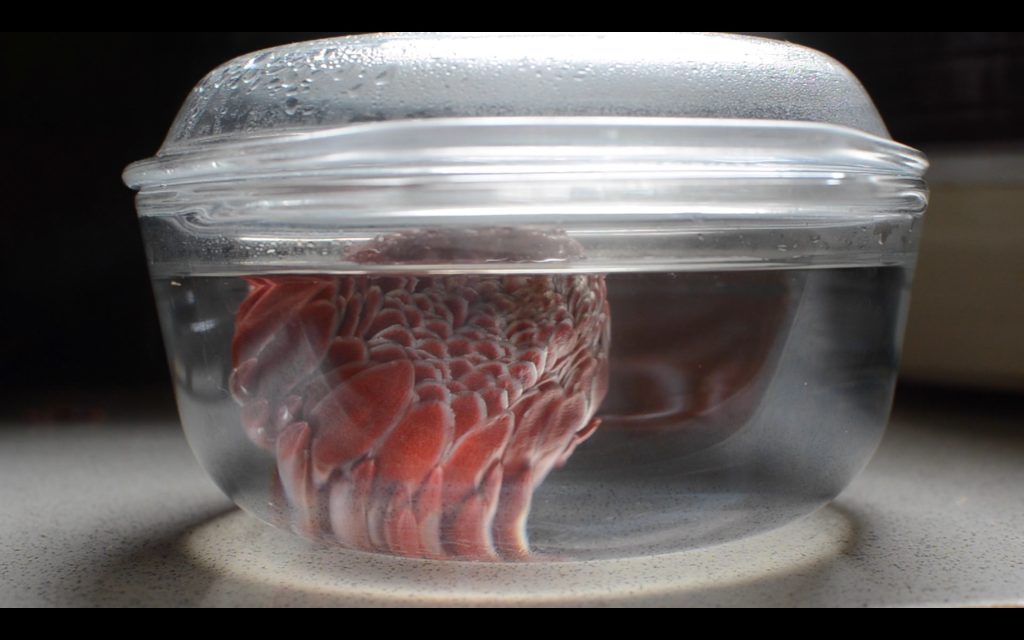
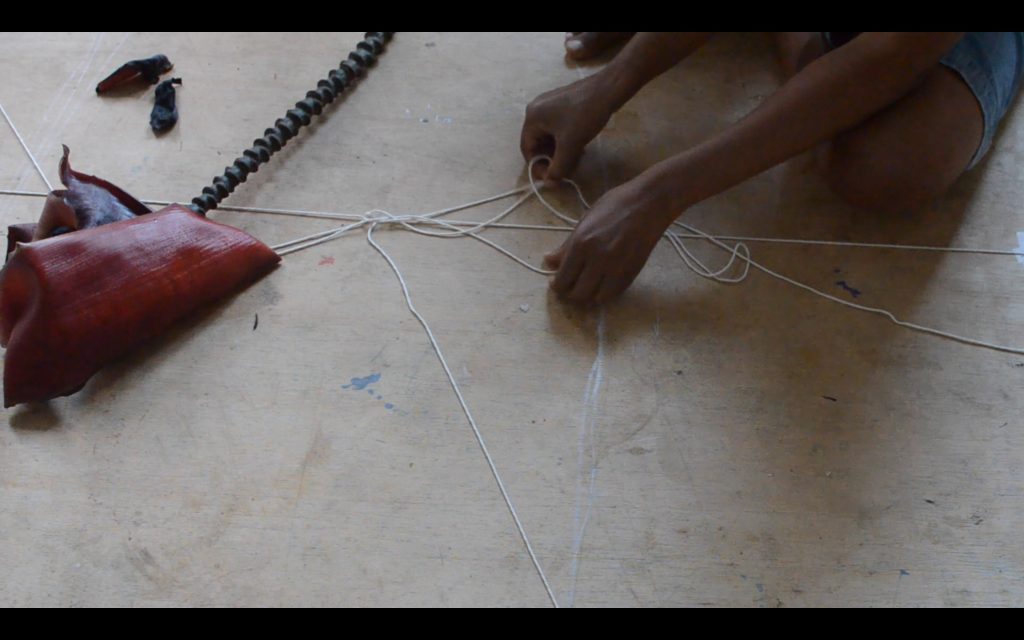
Minia Biabiany’s Musa, 2020, is a 13-minute video that intertwines memory, ecology, and the female body in the poisoned landscapes of Guadeloupe. Emerging from the exhibition Musa Nuit, the work asks: What does a Guadeloupean woman inherit, and how do we raise taboos? The still image of a flower-like form suspended in water, inscribed with the phrase “my uterus was a hull for four centuries,” anchors the video in the intertwined histories of slavery, colonialism, and reproductive violence. Through this lens, the banana becomes both material and metaphor—an agricultural crop central to Guadeloupe’s colonial economy and a symbol of how exploitation has been inscribed onto women’s bodies across generations.
The work situates itself within the toxic aftermath of French colonialism, specifically the contamination of Guadeloupe’s soil and water through the pesticide Kepone (Chlordecone). Approved in Paris but banned in the U.S., Kepone was widely used on Guadeloupean and Martinican banana plantations from the 1970s well into the 1990s, leaving irreversible traces in rivers, drinking water, and even breast milk. The video layers these ecological scars with intimate narratives, underscoring how colonial depletion and destruction reverberate not only through the land but also through the most intimate aspects of human life—gestation, lineage, sexuality.
Musa is both lament and act of resistance. By arranging materials, sounds, and images into a spatial narrative, Biabiany crafts an embodied meditation on survival in conditions of contamination. The work resists the colonial fantasy of fertile tropics, instead exposing a poisoned inheritance. Yet, in its poetic gestures, Musa also reclaims the possibility of connection: between soil and body, past and present, wound and voice. It is a reminder that to speak of bananas in Guadeloupe is also to speak of toxicity, taboos, and the fragile, ongoing work of re-rooting oneself in damaged ground.
