


ARTIST |
Estefanía Parra |
TITLE |
Llueve a cántaros |
YEAR |
2026 |
ARTIST’S COUNTRY OF ORIGEN |
Colombia |
DIMENSIONS |
Ø 4ft |
MEDIUM |
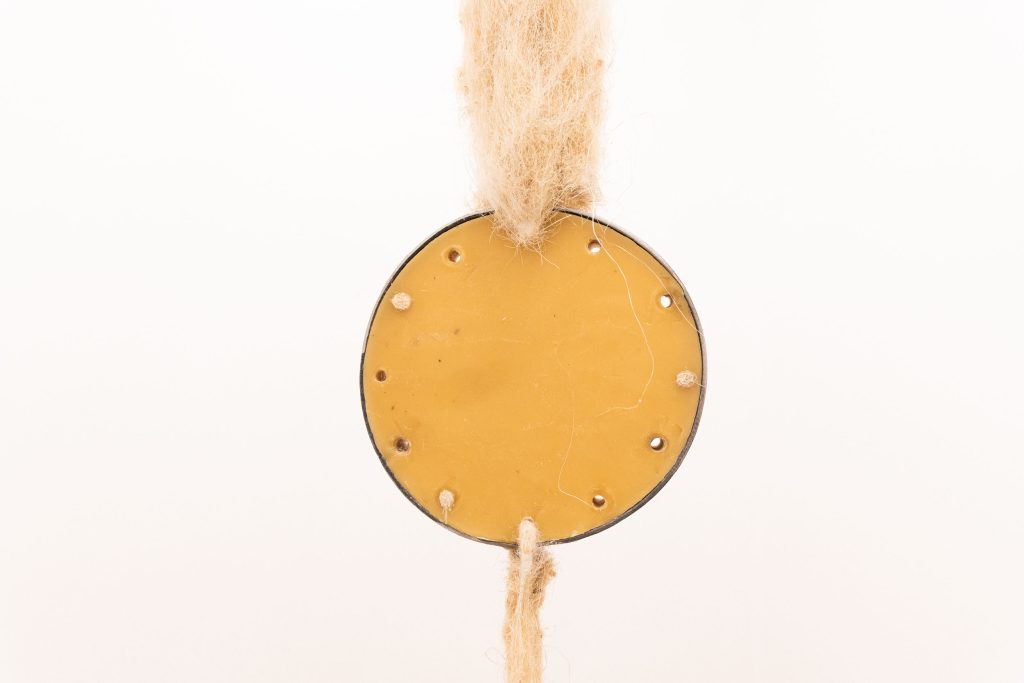
Metal, soil, banana fiber, beeswax, and rubber |
Courtesy of the artist
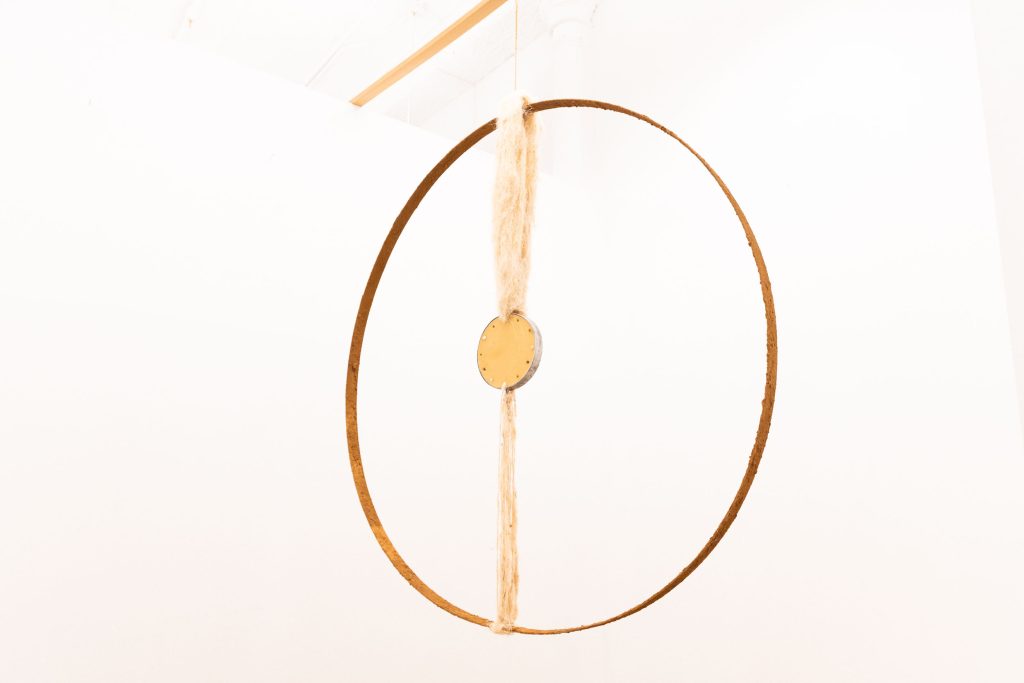
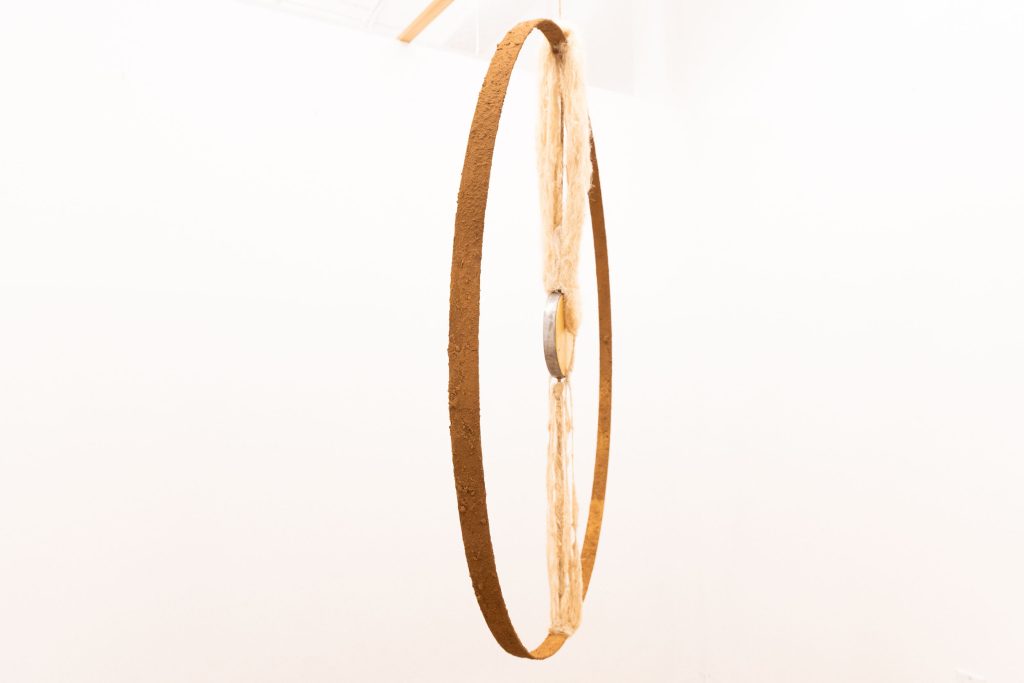
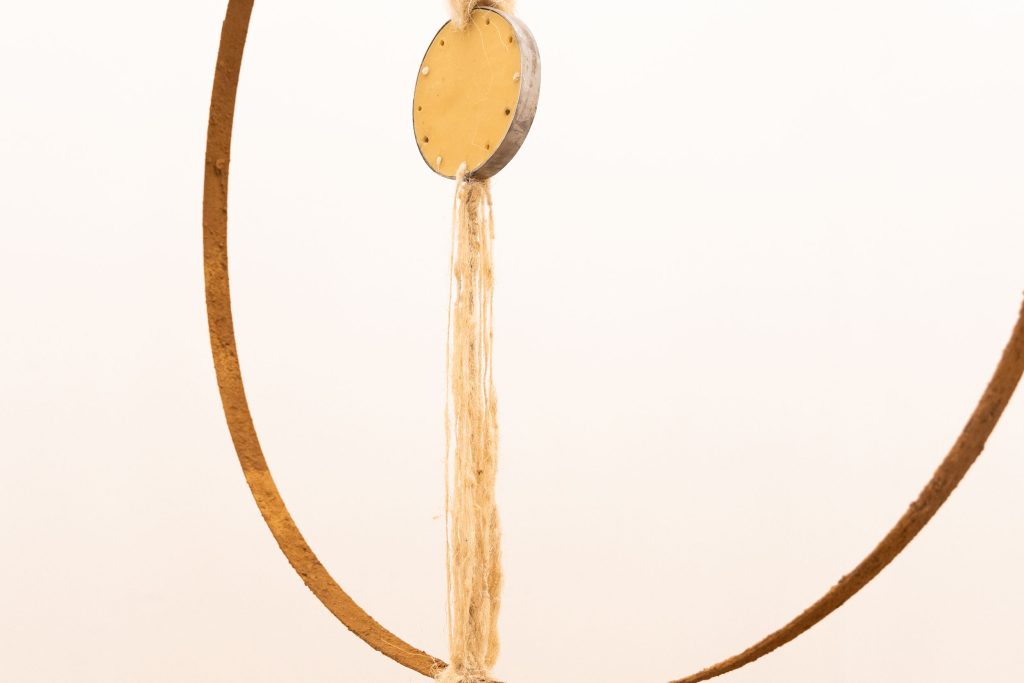
In Llueve a cántaros (2026), Estefanía Parra uses banana fiber to construct a suspended structure poised between balance and rupture. A circular form encloses vertical strands of fiber that stretch across the work like a fragile membrane, simultaneously evoking portals, borders, thresholds, and connective tissues. The installation inhabits a state of tension: the materials appear delicately held together, as though the slightest shift in weight could alter or collapse the entire structure.
Drawing from reflections on migration, territorial division, and systems of spatial control, the work approaches the circle as an ambiguous form. It suggests movement and continuity while also marking containment and restriction. The banana fiber traversing the structure resembles both connective thread and obstructed passage — a material line suspended between circulation and interruption. Through this formal economy, Parra evokes the instability that shapes migrant experience: the constant negotiation between mobility, rootedness, and precarity.
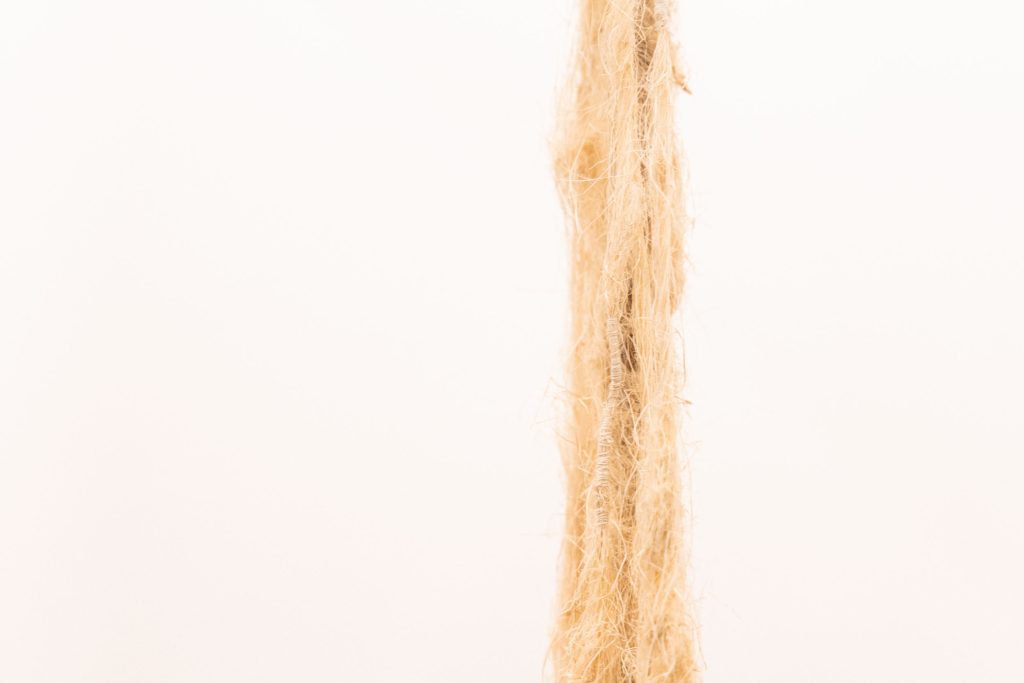
The banana fiber functions here as more than a sculptural material; it becomes a carrier of memory, labor, and transformation. Neither decorative nor symbolic in a conventional sense, the fiber condenses histories of agricultural extraction, circulation, and displacement into a minimal yet charged spatial gesture. By foregrounding tension, fragility, and suspended movement, Llueve a cántaros expands Banana Craze’s exploration of the banana beyond representation, positioning it instead as a material infrastructure through which broader questions of territory, migration, and belonging can be imagined.
