


ARTIST |
Sofía (y Rosalba) Perdomo Sanz (y Sanz) |
TITLE |
Hallacas: ritual y memoria |
YEAR |
2026 |
ARTIST’S COUNTRY OF ORIGEN |
Venezuela, Spain |
DIMENSIONS |
Variable dimensions |
MEDIUM |
Performative conversation |
Migra la food, Sofía Perdomo, Rosalba Sanz
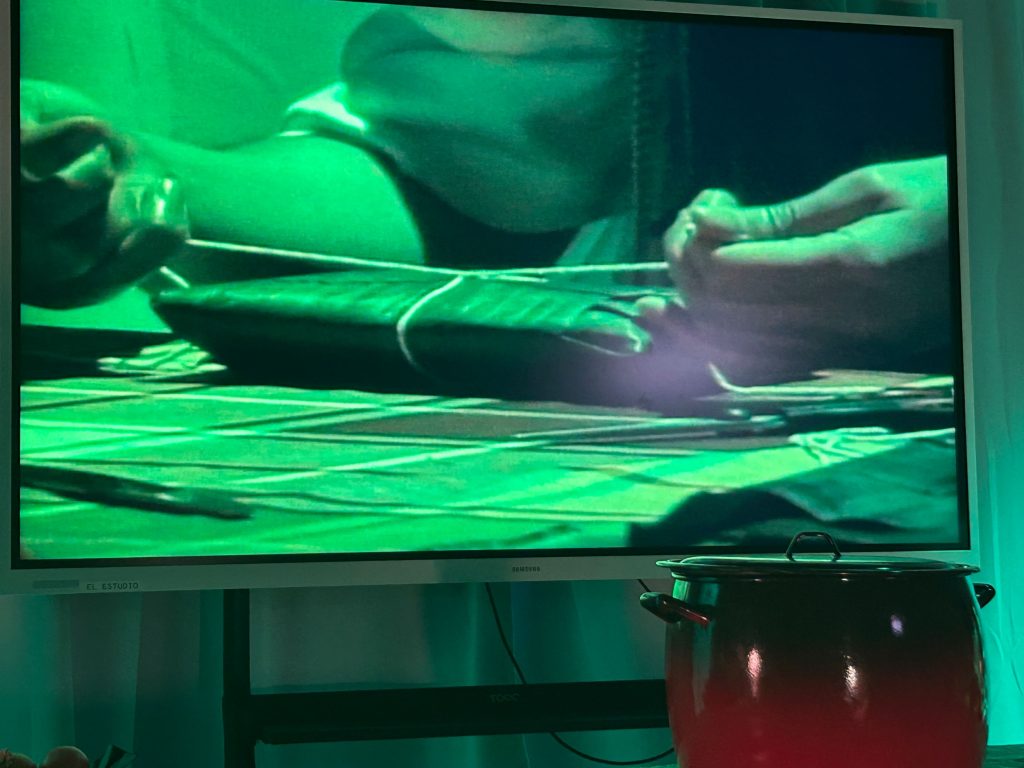
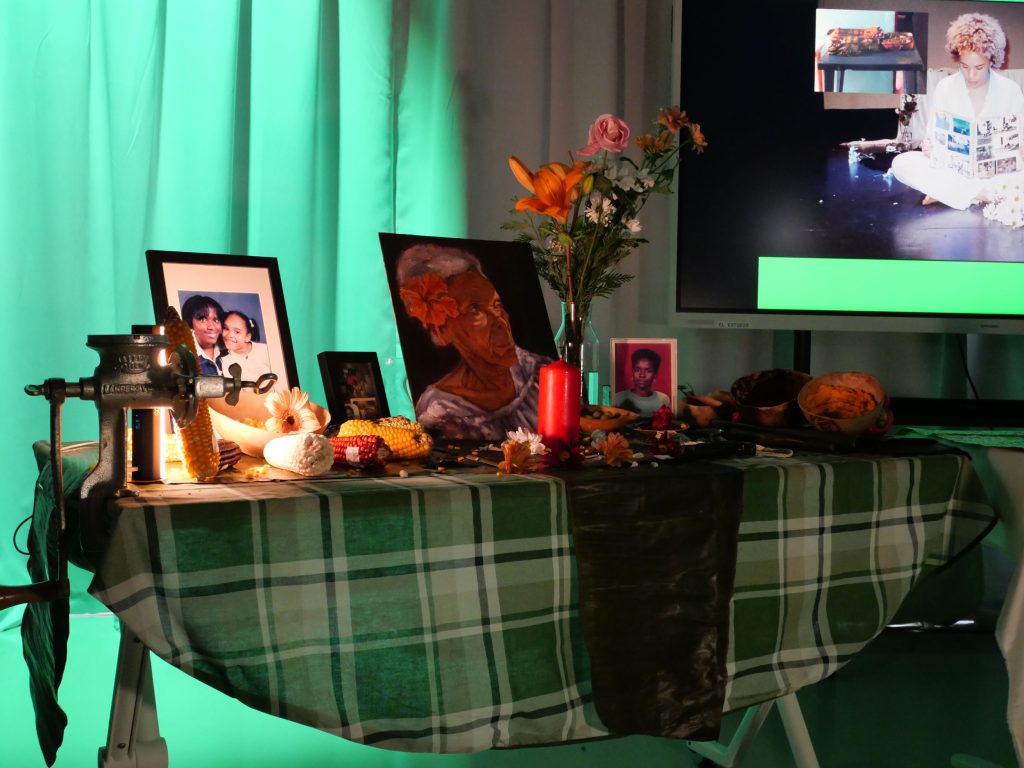
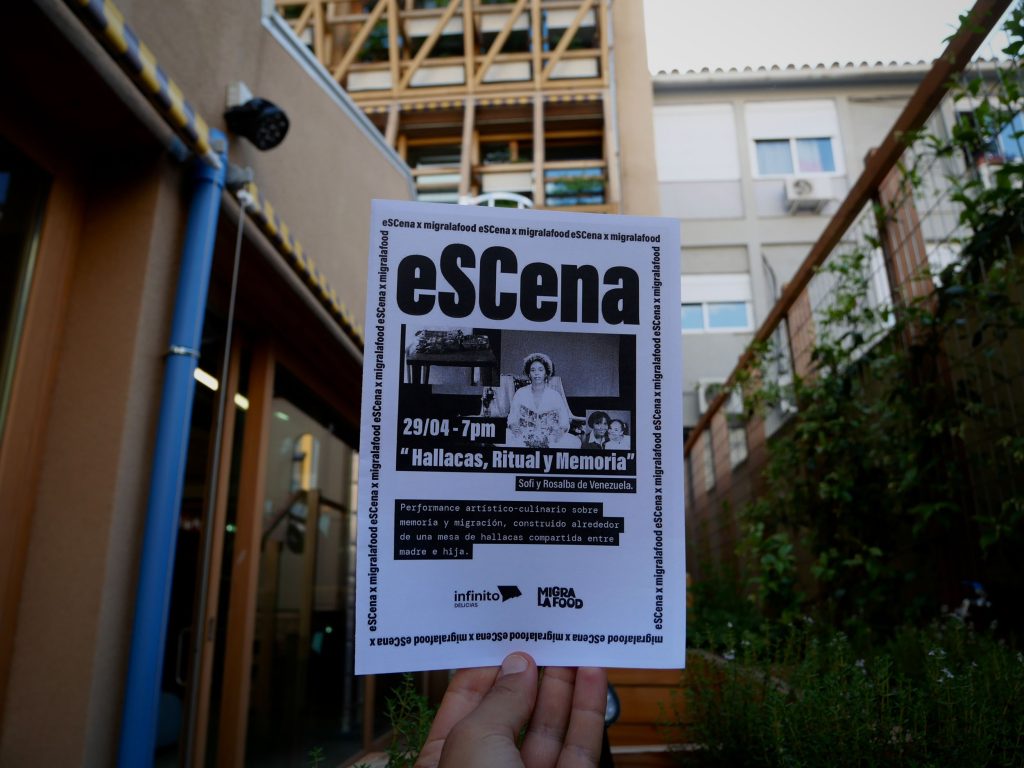
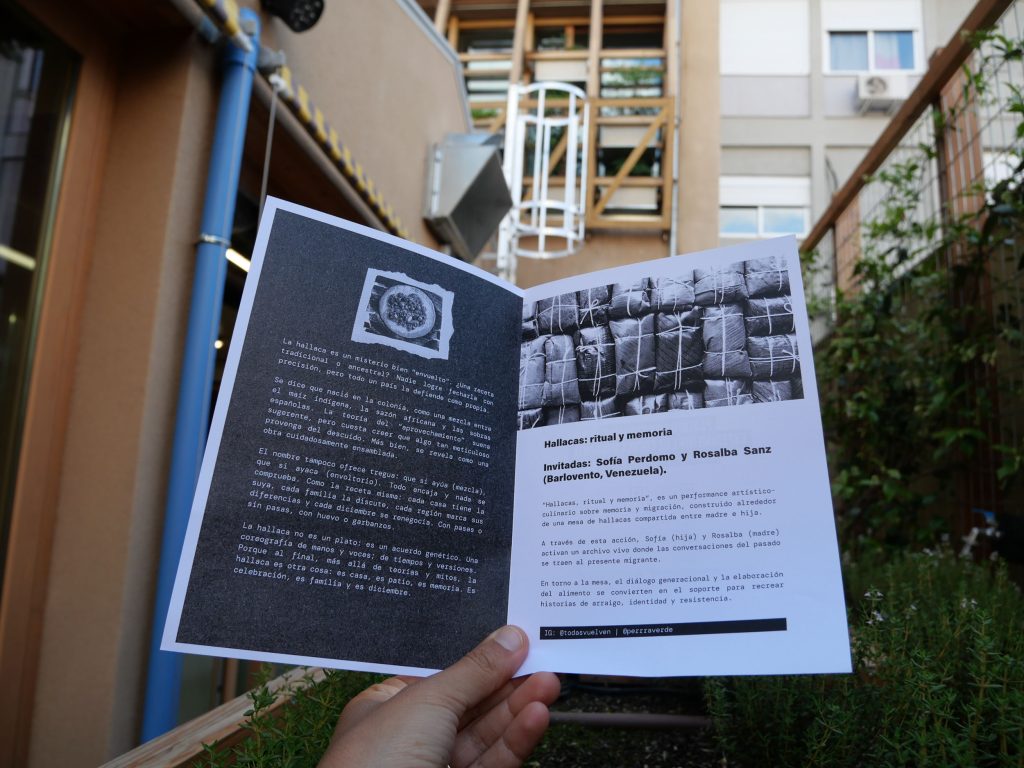
In Hallacas: ritual y memoria (2026), Sofía Perdomo Sanz and Rosalba Sanz transform the preparation of hallacas into a performative archive of migration, intimacy, and intergenerational transmission. Structured as a live conversation between mother and daughter, the work unfolds around the traditional labor of preparing the Venezuelan dish, activating family photographs, recipes, objects, and oral histories that move between past and present. Here, cooking becomes more than nourishment: it operates as a ritual technology through which memory is preserved, rehearsed, and collectively shared.
At the center of the work lies the banana leaf. Far from functioning as a neutral culinary material, the leaf emerges as a dense political and affective infrastructure sustaining the entire ritual. During the performance, Sofía and Rosalba reflect on the often invisible economies surrounding its circulation: the seasonal labor dedicated to cutting, cleaning, softening, and preparing the leaves in regions such as Barlovento, as well as the difficulties of accessing them within migrant contexts like Madrid. The banana leaf thus becomes a material witness to systems of exportation, uneven distribution, and agricultural labor that silently underpin diasporic food practices. Wrapping the hallaca becomes, in turn, an act of protection and transmission — a gesture through which cultural memory is folded, carried, and preserved across borders.
Through this displacement from fruit to leaf, from commodity to gesture, Hallacas: ritual y memoria expands many of the concerns central to Banana Craze. The banana appears here not as spectacle or tropical cliché, but as the material support of everyday cultural continuity. The work foregrounds the hidden infrastructures, embodied knowledges, and domestic choreographies that sustain migrant life from below. In doing so, it reminds us that the histories embedded within banana economies are not only inscribed in plantations and export routes, but also in kitchens, family rituals, and the fragile acts of care through which communities remake home in diaspora.
