


ARTIST |
Carmen Argote |
TITLE |
How thin are the walls between |
YEAR |
2022 |
ARTIST’S COUNTRY OF ORIGEN |
Mexico, USA |
DIMENSIONS |
19 x 84 x 31 cm / 7.5 x 33 x 12 " |
MEDIUM |
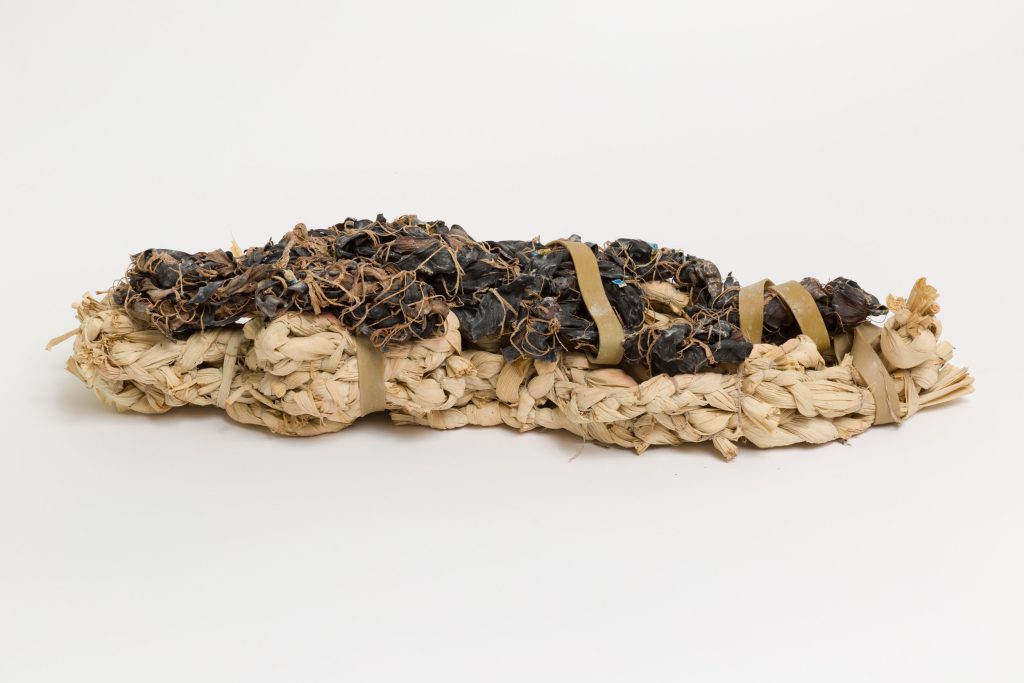
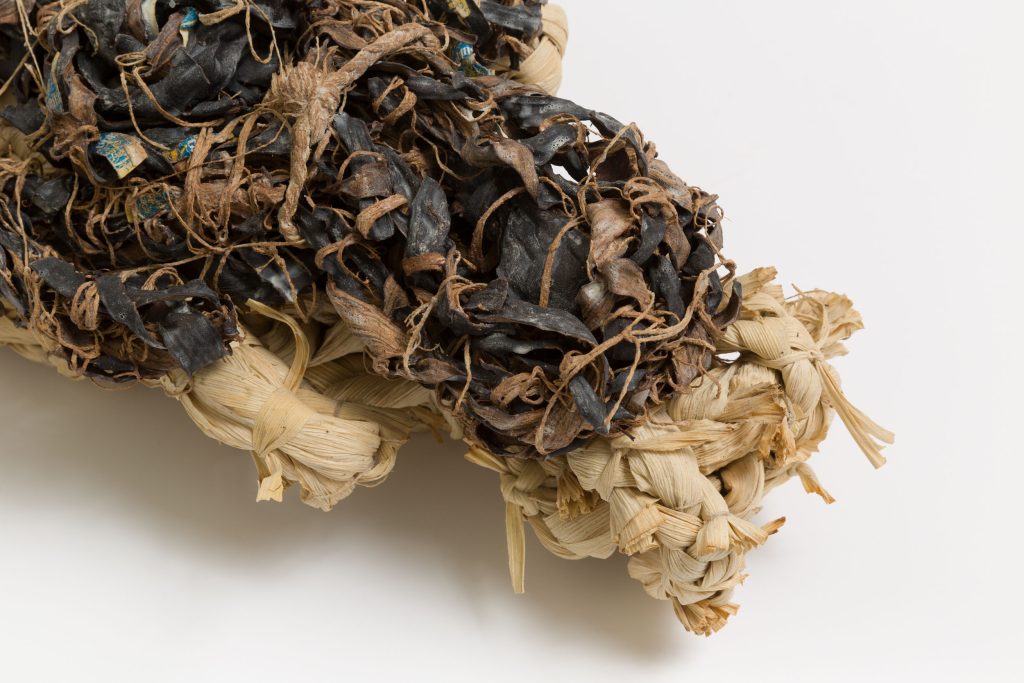
Corn husks, banana peels, linen, crepe rubber band, clear gesso |
Courtesy of the Artist and Commonwealth and Council
In comforting object: and paradox (2022), Carmen Argote assembles banana peels, corn husks, linen, and rubber into a fragile sculptural form that hovers between tenderness and disintegration. The work resembles a partially collapsed body or improvised domestic relic, its dried organic materials folded and suspended in a state of quiet instability. As in much of Argote’s practice, the sculpture emerges through gestures of accumulation, wrapping, binding, and care, transforming discarded matter into an intimate emotional landscape.
The banana peel occupies a central role within the piece, carrying simultaneous associations of nourishment, waste, humor, and bodily vulnerability. Stripped from the fruit itself and left to dry, curl, and stiffen, the peel becomes a residue of consumption but also a material archive of touch and transformation. Paired with corn husks — another material deeply tied to histories of domestic labor, migration, and sustenance across the Americas — the banana peel allows the work to oscillate between comfort and precarity, preservation and decomposition. The sculpture’s suspended arrangement suggests both protection and fragility, as though the object were attempting to hold itself together while slowly unraveling.
Like Ripe Child from the artist’s Mother series, comforting object: and paradox approaches organic matter as an extension of emotional and bodily experience. Born in Guadalajara and based in Los Angeles, Argote frequently uses ephemeral materials to reflect on memory, care, cultural inheritance, and the unstable boundaries between self and environment. Here, the banana peel becomes more than discarded skin: it operates as a tender but unstable membrane through which questions of nourishment, intimacy, and emotional repair emerge. The work ultimately proposes softness itself as a site of resistance, where acts of holding, binding, and tending acquire quiet political force.
