


ARTIST |
Carmen Argote |
TITLE |
Ripe Child |
YEAR |
2022 |
ARTIST’S COUNTRY OF ORIGEN |
Mexico, USA |
DIMENSIONS |
213 x 152 x 4 cm / 84 x 60 x 1.5 " |
MEDIUM |
Banana, papier-mâché, pastel on linen |
Courtesy of the Artist and Commonwealth and Council. Photo: Paul Salveson
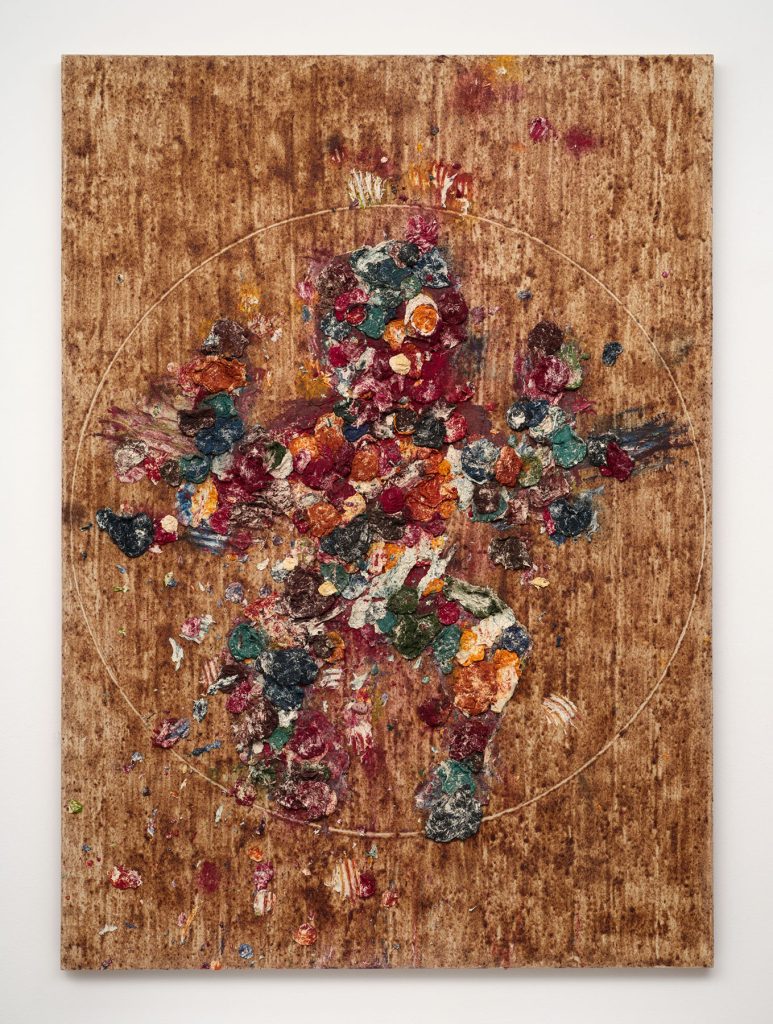
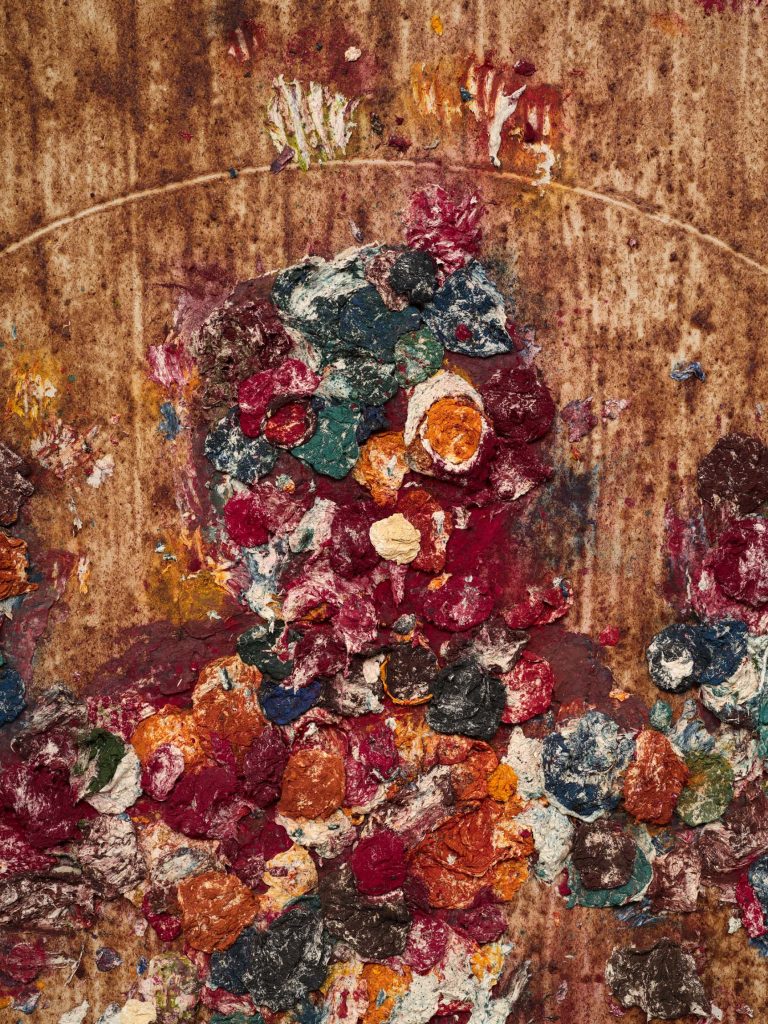
In Ripe Child (2022), Carmen Argote transforms the humble banana into a vessel for tenderness and revolt. Formed from banana pulp, papier-mâché, and pastel on linen, the work evokes a body in motion—an amorphous, child-like figure both bursting forth and dissolving into the surrounding surface. Its textured mass of ochres, reds, and purples pulsates with life and decay, echoing the dualities that underlie Argote’s practice: nourishment and waste, growth and rupture, love and loss. The circular outline that encloses the composition suggests containment, but the figure’s energy spills beyond, signaling an ongoing process of becoming.
Part of Argote’s Mother series, Ripe Child materializes the artist’s dialogue with her own interior selves—the mother and the child, the nurturer and the nurtured. The thrown, clustered papier-mâché recalls spitballs on a classroom ceiling, playful yet rebellious, while the banana material—at once organic and abject—anchors the piece in the realm of the bodily and the domestic. Through these fragile substances, Argote performs a gesture of “re-mothering,” tending to the parts of herself that remain vulnerable and wild. The resulting figure becomes an effigy of care, both fierce and gentle, a reminder that self-knowledge often emerges through acts of making and unmaking.
Incorporating the banana across several works, Argote links her personal cosmology to broader questions of cultural inheritance and power. Born in Guadalajara and based in Los Angeles, she uses the fruit’s transient materiality to reflect on transnational identity and the learned behaviors of patriarchy. Yet even as she confronts these structures, her voice remains nurturing—addressed to her audience, her materials, and her “ripe child” within. The piece thus embodies Argote’s conviction that art can be both a site of resistance and of repair, where the boundaries between body, matter, and memory momentarily dissolve.
