


ARTIST |
Nicolás Consuegra |
TITLE |
How to Read a Banana |
YEAR |
2017 |
ARTIST’S COUNTRY OF ORIGEN |
Colombia |
DIMENSIONS |
100 x 130 cm / 39.37 x 51.18 " |
MEDIUM |
Nine digital prints mounted on light boxes |
Courtesy of the Artist
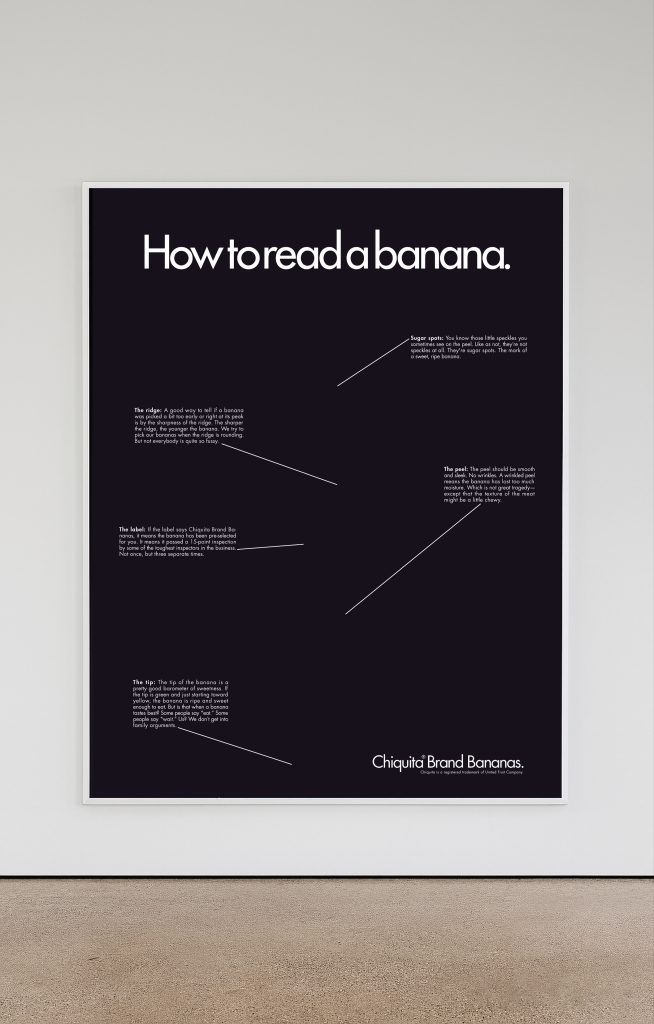
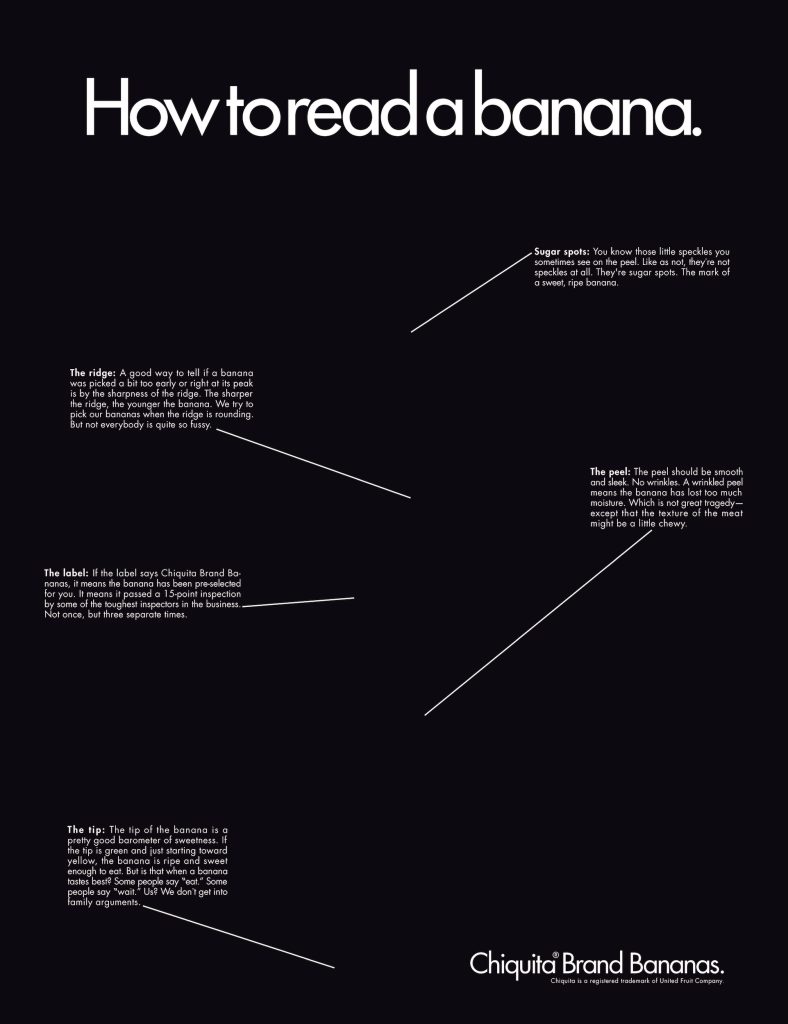
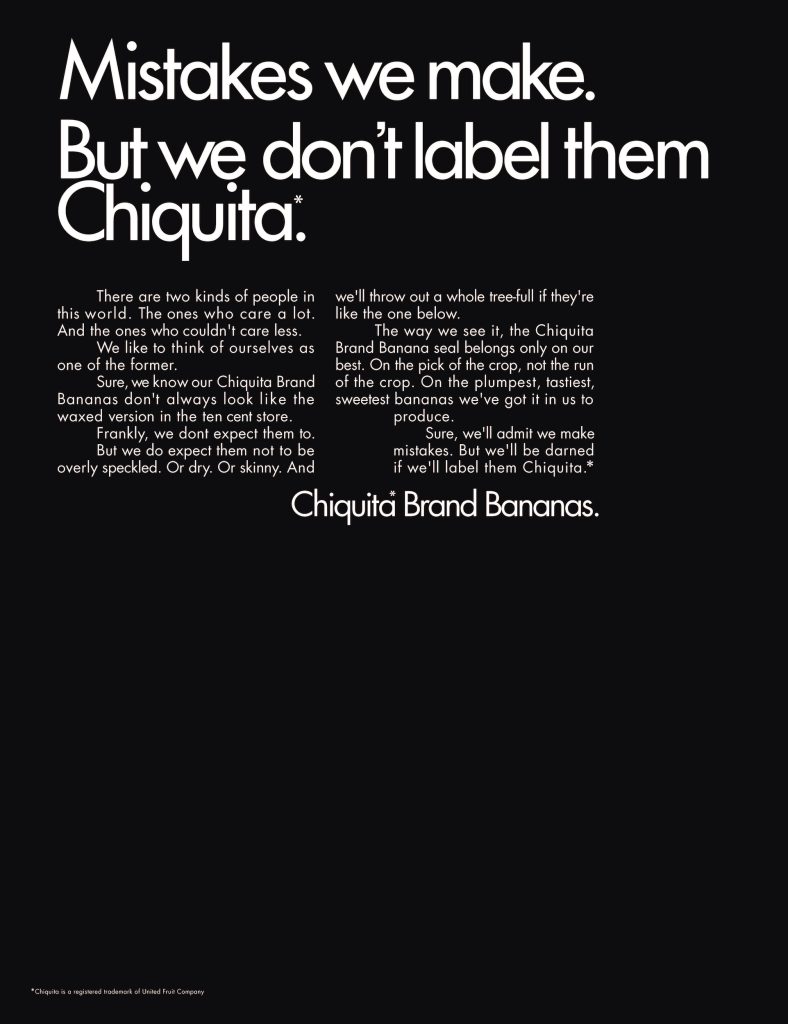
Nicolás Consuegra’s How to Read a Banana (2017) revisits a mid-twentieth-century advertising campaign by the United Fruit Company to expose how language and design can mask systems of control. The work reproduces the structure and tone of the original Chiquita Brand Bananas print ads—clean typography, a didactic voice, and a promise of quality—yet drains them of imagery, leaving only text on a stark black field. What remains is a choreography of persuasion: disembodied phrases instructing how to “read” the banana’s color, shape, and peel. Through this act of subtraction, Consuegra renders visible the mechanisms of marketing that once rebranded a colonial enterprise as a symbol of modern pleasure and reliability.
The series—composed of nine digital prints mounted on light boxes—translates the gleaming optimism of 1960s corporate design into an uncanny void. The use of Futura, a typeface long associated with progress and rationality, becomes a vehicle for irony; its clean geometry mirrors the company’s own attempt to sanitize the messy histories of land dispossession and labor exploitation behind the fruit. By maintaining the ad’s original tone of expertise while erasing the banana itself, Consuegra inverts the campaign’s logic: what was once an invitation to consume now becomes a prompt to question, to read beyond the surface of the commodity.
Within the context of Banana Craze, How to Read a Banana serves as a conceptual hinge between image and ideology. The banana—once exoticized, standardized, and branded—appears only in linguistic trace, its absence speaking louder than any photograph. Consuegra’s minimalist intervention underscores how corporate aesthetics helped naturalize global inequities, transforming tropical abundance into controlled imagery. By turning the advertising light box into a site of critique, the artist illuminates not the fruit, but the machinery of belief that made it palatable to the world.
