


ARTIST |
Baquerizo-Racines Francisco |
TITLE |
Arenita |
YEAR |
2024 |
ARTIST’S COUNTRY OF ORIGEN |
Ecuador |
DIMENSIONS |
40 x 30 cm / 15.75 x 11.81 " |
MEDIUM |
Mixed media on paper |
Courtesy of the artist
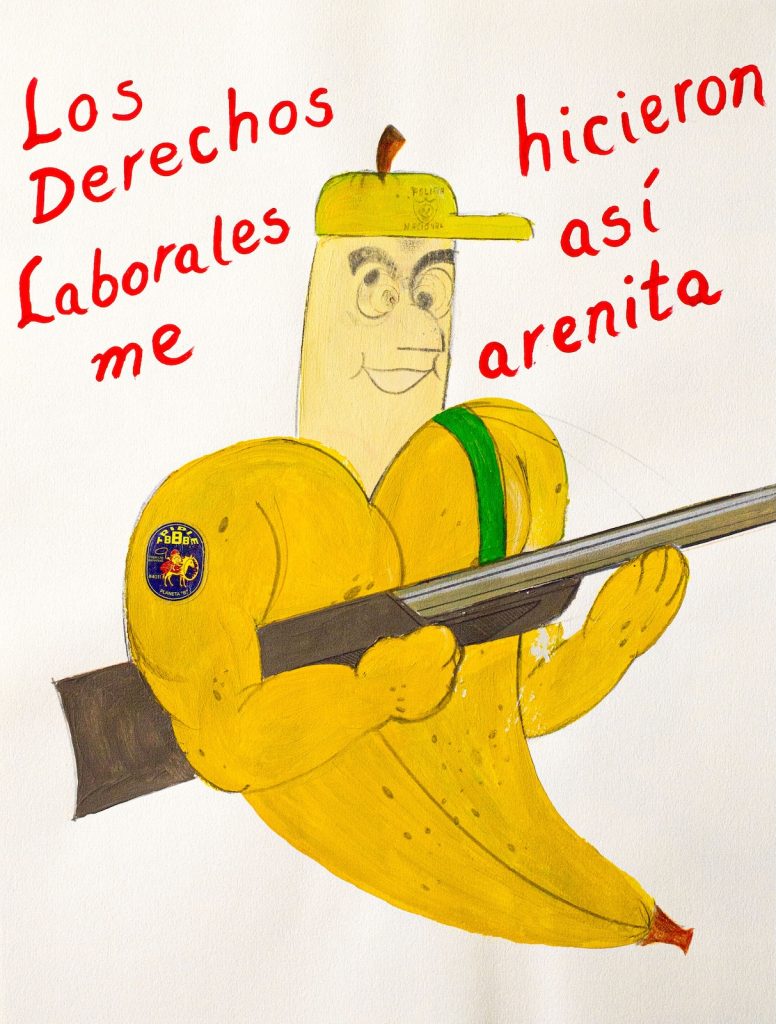
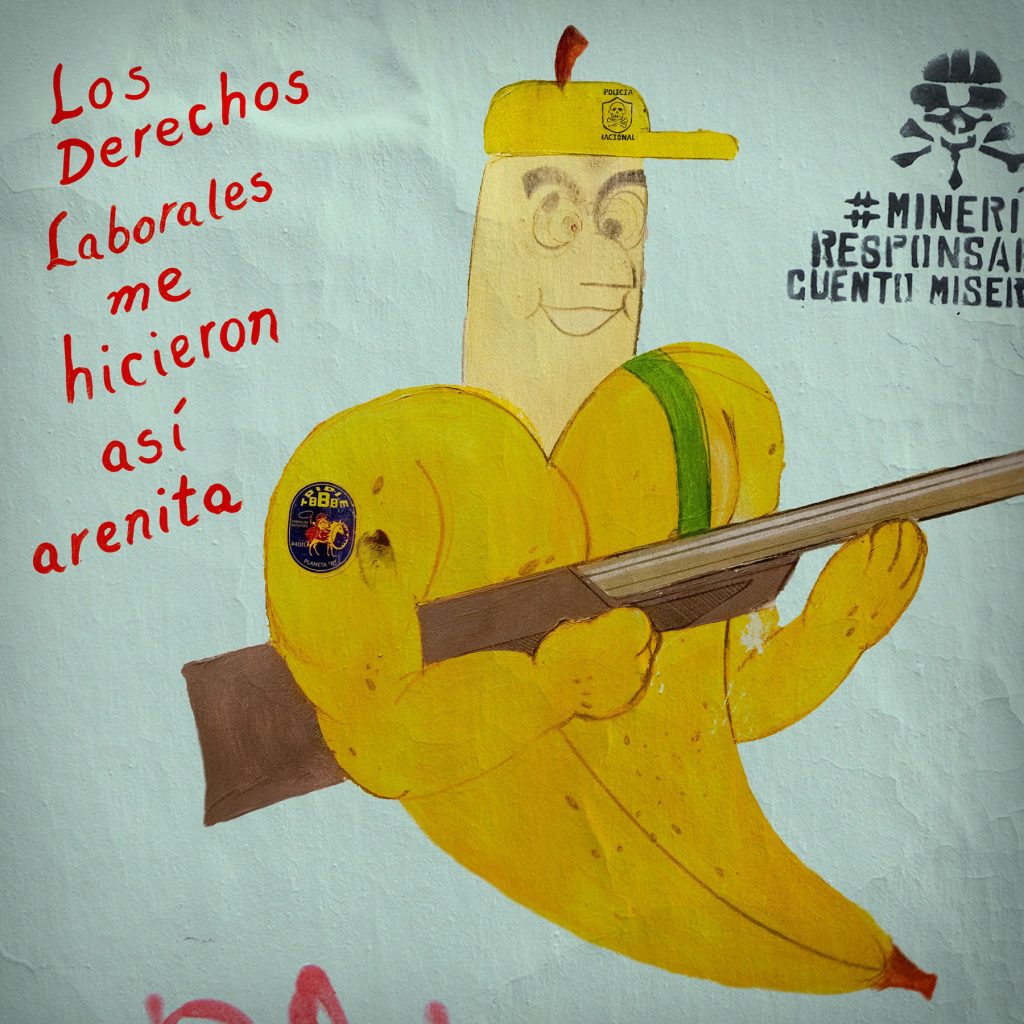
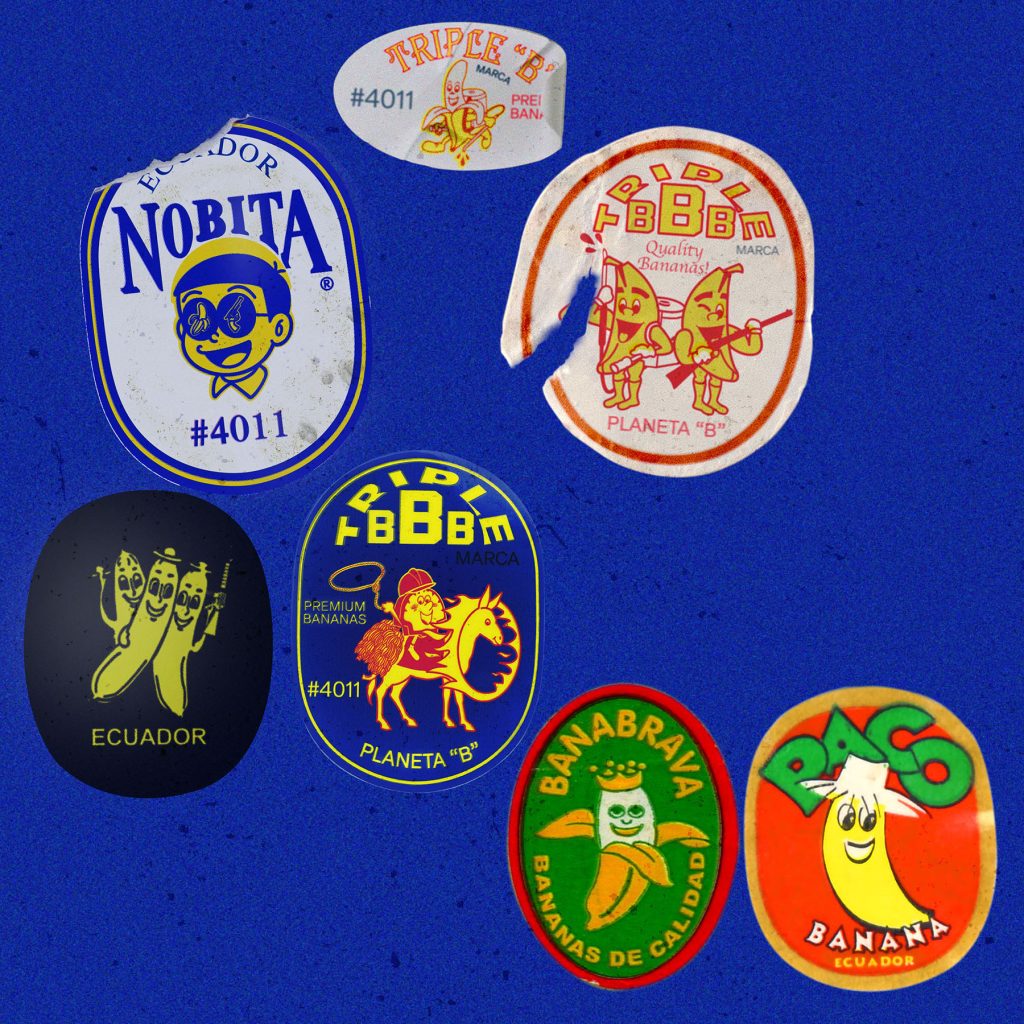
Francisco Baquerizo Racines’s Arenita (2024) extends his sharp visual commentary on Ecuador’s political landscape through the aesthetics of internet satire and popular vernacular art. Painted in mixed media on paper, the work features a muscular anthropomorphic banana dressed as a soldier, rifle in hand, beneath the ironic inscription: “Los derechos laborales me hicieron así, arenita.” The phrase—borrowed from a meme featuring an enraged SpongeBob—becomes a vehicle for double-edged humor: in Baquerizo’s version, it points not to empowerment through labor rights, but to the absurdity of their absence. The banana’s body, emblazoned with the insignia of Policía Municipal and a Bonita Premium Bananas sticker, is both comic and chilling, embodying the complicity of state and corporate power in the repression of workers’ demands.
Rooted in the graphic language of Ecuador’s streets—hand-drawn signage on trucks, cans, and storefronts—the piece mimics the visual codes of informal communication, blending humor, bricolage, and denunciation. The banana, long a national export and political symbol, here mutates into a paramilitary caricature: a fruit turned enforcer. Baquerizo connects the militarization of the police and the extractivist agenda of the Noboa administration to the historical entanglement of banana empires, labor exploitation, and state corruption. The caption’s casual tone contrasts violently with the imagery of armed control, exposing how propaganda and memes alike can normalize the grotesque.
In Arenita, the banana becomes a site of moral inversion: no longer a nourishing staple or a symbol of tropical innocence, it embodies the toxic fusion of commerce, violence, and power. The artist’s layered references—from corporate logos to protest graffiti—trace a continuum between plantation economies and the policing of dissent. Through parody, Baquerizo forces his audience to confront how easily violence is aestheticized in public discourse, and how deeply the politics of the banana continue to shape Ecuador’s collective psyche.
