


ARTIST |
Kathia St. Hilaire |
TITLE |
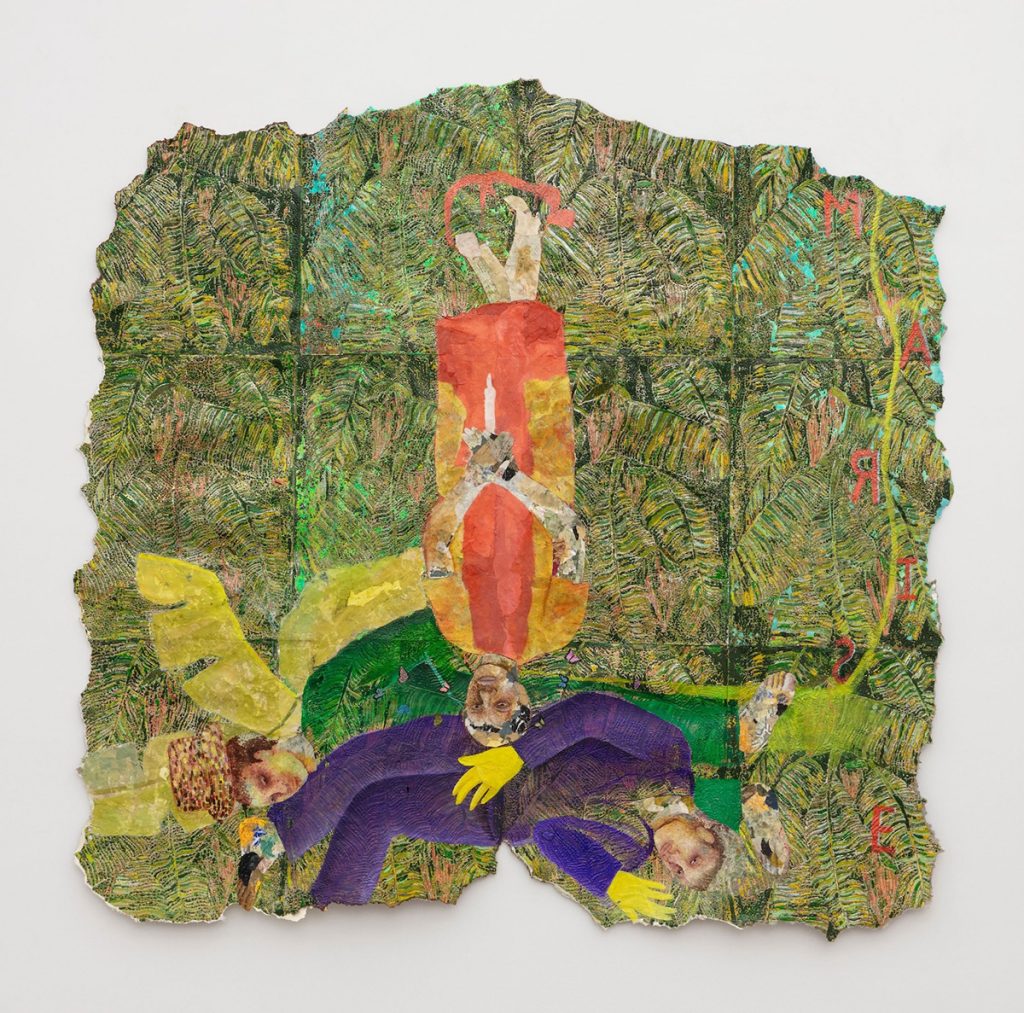
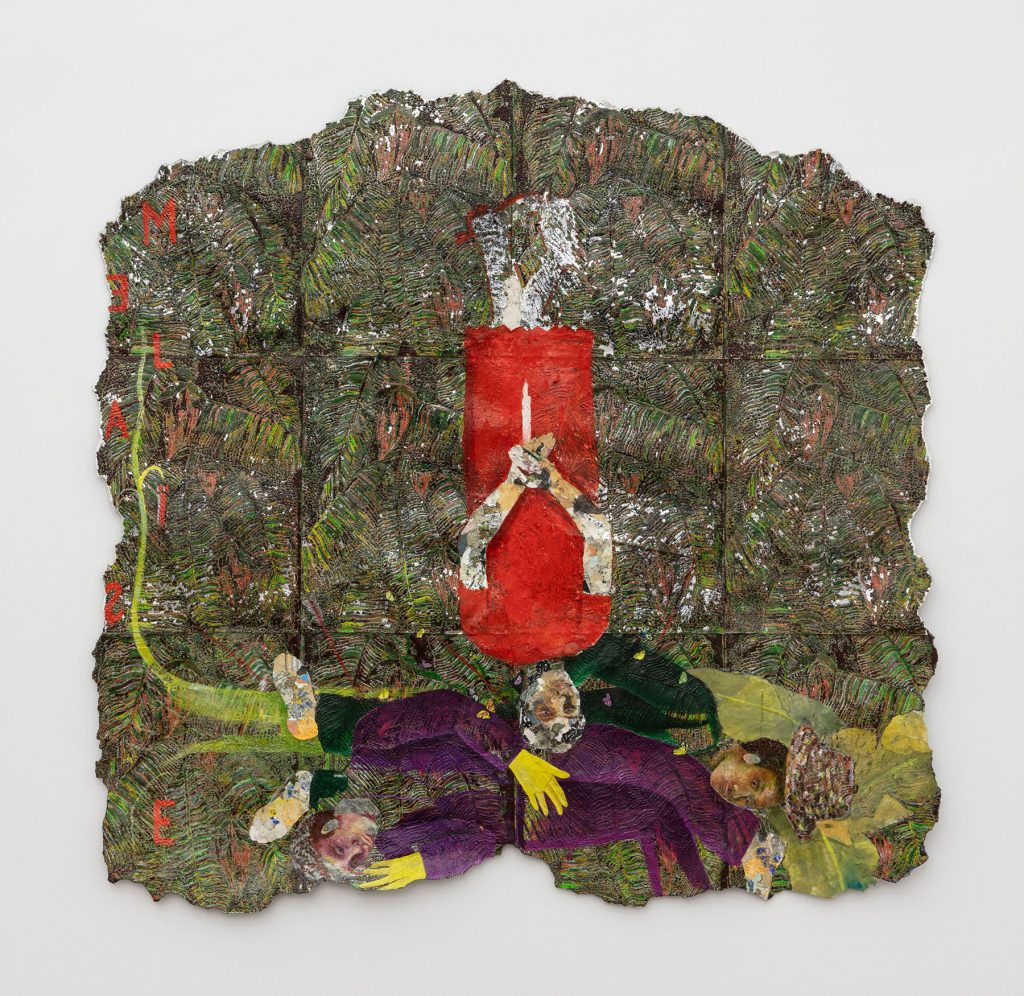
Marise and Melaise |
YEAR |
2023 |
ARTIST’S COUNTRY OF ORIGEN |
Haiti, USA |
DIMENSIONS |
177.8 x 185.4 cm / 70 x 73 ". Melaise: 177.8 x 180.3 cm / 70 x 71 " |
MEDIUM |
Oil based relief on canvas collage with skin lightening cream, steel, aluminium, banknotes, banana stickers, silkscreen, paper and tires with paraloid |
Courtesy of the Artist and Perrotin. Photographer: Guillaume Ziccarelli
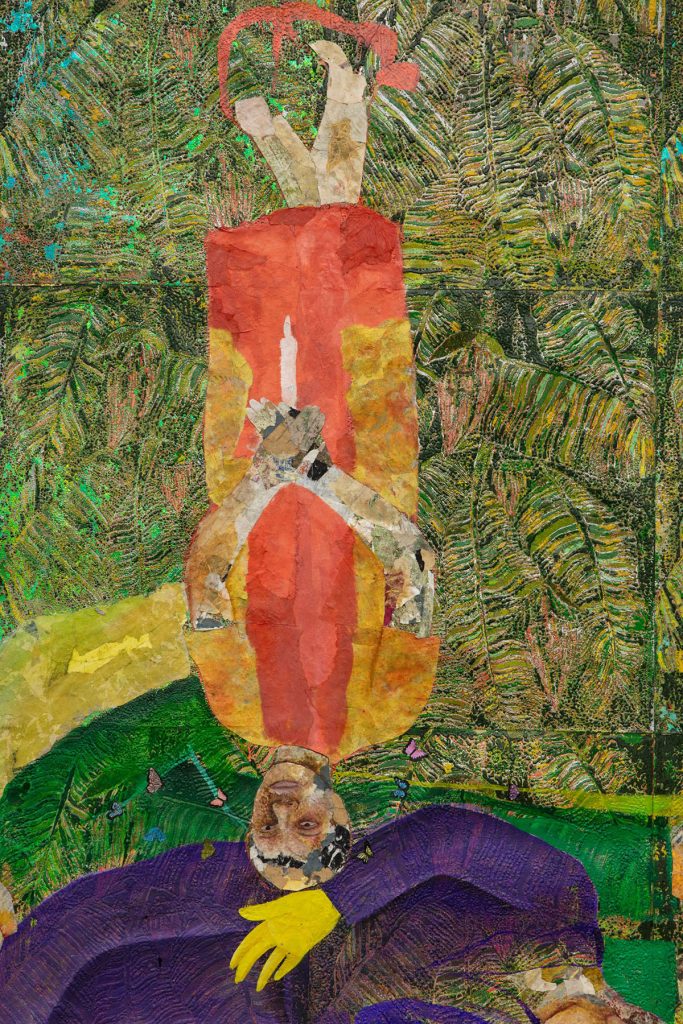
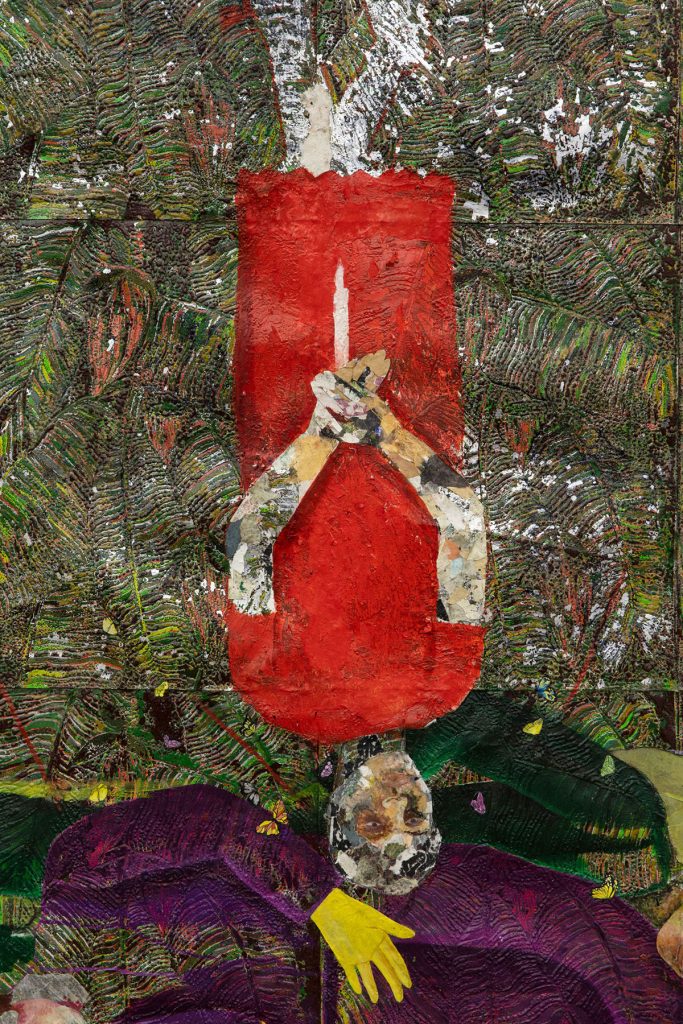
In Marise and Melaise (2023), Kathia St. Hilaire constructs two richly textured canvases that operate as hybrid tapestries—part painting, part relief print, part historical ledger. Made through an intricate reduction relief process and incorporating unconventional materials such as skin-lightening creams, tires, metal, banknotes, and banana stickers, these works fuse the intimate with the geopolitical. Their surfaces pulse with density: lush vegetation, figures rendered in jewel-toned hues, and motifs that evoke both Haitian Vodun cosmologies and the lingering traces of colonial extraction. By embedding actual banana stickers and currency into the composition, St. Hilaire signals how global commodities—plantains and bananas among them—continue to shape and distort Haiti’s economic and social realities.
The two works center the artist’s grandmother (Marise) and great-grandmother (Melaise), positioning familial memory within the broader narrative arcs of Gabriel García Márquez’s One Hundred Years of Solitude. As in Márquez’s magical-realist novel, where the Banana Wars form a shadowy but decisive backdrop, St. Hilaire treats personal lineage as inseparable from imperial history. The use of collage—layers of fabric, printed textures, and accumulated fragments—mirrors the structure of oral storytelling itself: stories retold, reconfigured, half-remembered, and always at risk of fading. The banana, in this context, appears both literally and symbolically. Its stickers, repurposed as material, echo the corporate presence that once orchestrated political upheaval across the Caribbean, while also functioning as small archival markers in an artist’s attempt to reclaim narrative agency.
Read together, Marise and Melaise act as self-authored archives—tactile attempts to rescue family histories from erasure while acknowledging the forces that threaten them. Their crinkled, tapestry-like surfaces evoke the weight of time and the fragility of inherited memory. St. Hilaire’s fusion of ancestral portraiture with materials tied to imperial economies creates a visual register in which past and present, myth and political reality, coexist. Through this synthesis, she invites viewers to reconsider how histories of extraction—symbolized most overtly by the banana—continue to reverberate through bodies, landscapes, and diasporic identities. These works do not merely retell a story; they insist on crafting a future in which such stories cannot be forgotten.
