


ARTIST |
Julia Santos Salomon |
TITLE |
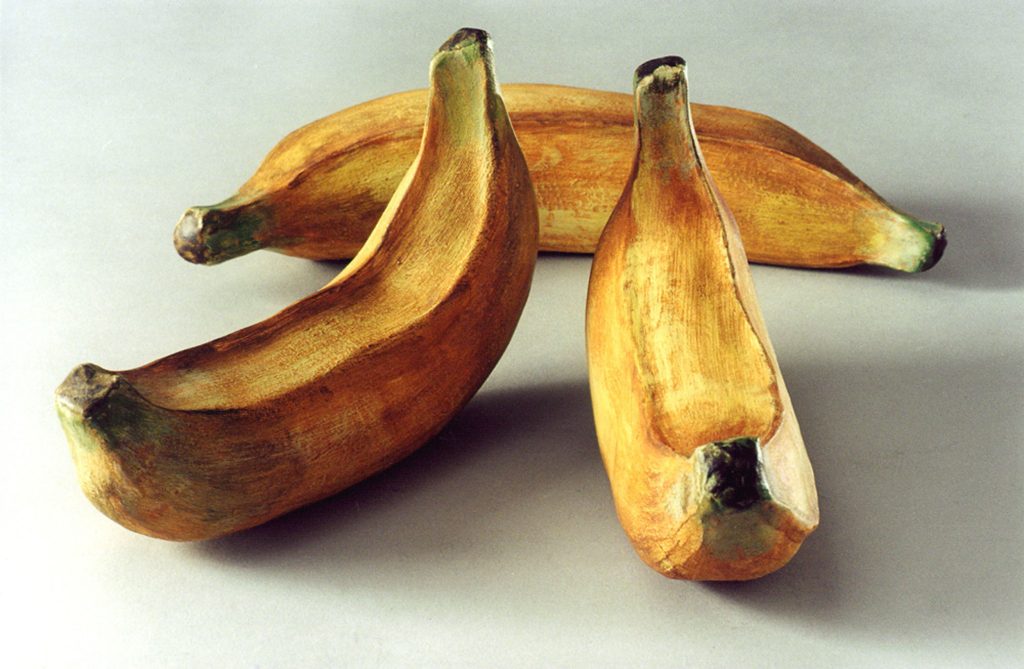
Plátanos |
YEAR |
2003 |
ARTIST’S COUNTRY OF ORIGEN |
Dominican Republic, USA |
DIMENSIONS |
Variable dimensions |
MEDIUM |
Ceramic |
Courtesy of the artist
In Plátanos (2003), Julia Santos Salomon turns to ceramics to honor one of the most intimate and enduring motifs of Caribbean domestic life. The work presents three hand-painted plantains, their surfaces modeled with evident care and attention to texture. Rather than glazing the pieces, the artist opted for painted ceramic, allowing the color to hold emotional charge rather than a polished finish. In doing so, Santos Salomon evokes the raw, tactile presence of plantains at home before cooking—objects both humble and beloved, situated at the very heart of Dominican culinary culture.
The sculpture forms part of a broader installation dedicated to the artist’s grandmother, Gabina, the “master cook” whose kitchen shaped Santos Salomon’s early sensory world. The plantain becomes here not merely a crop central to Dominican sustenance, but a vessel of memory and intergenerational affection. Each ceramic fruit carries the imprint of childhood wonder: the countless ways her grandmother transformed this staple—boiled, fried, baked, caramelized—into nourishment and care. By materializing these memories in clay, the artist bridges domestic ritual and artistic practice, and elevates the everyday fruit to a keeper of personal and cultural history.
Deeply rooted in autobiography, Plátanos resonates with the themes that run consistently through Santos Salomon’s oeuvre: curiosity, sensory experience, and the intertwining of place and self. As she has written about her broader practice, “I am in the landscape and the landscape is in me… I process the world through Caribbean eyes.” In presenting the plantain as both object and memory, she invites viewers to consider their own inherited landscapes—the foods, gestures, and textures that travel with us across borders and generations. The piece, while intimate, expands into a reflection on belonging, diaspora, and the subtle ways that everyday materials hold the stories of who we are and where we come from.
