


ARTIST |
Lucía Hierro |
TITLE |
Platanitos |
YEAR |
2019 |
ARTIST’S COUNTRY OF ORIGEN |
Dominican Republic, United States |
DIMENSIONS |
243.84 x 30.48 x 17.78 cm / 96 x 12 x 7 " |
MEDIUM |
Digital print on brushed nylon, foam, and powder coated aluminum |
Courtesy of the artist; artist represented by Fabienne Levy Gallery
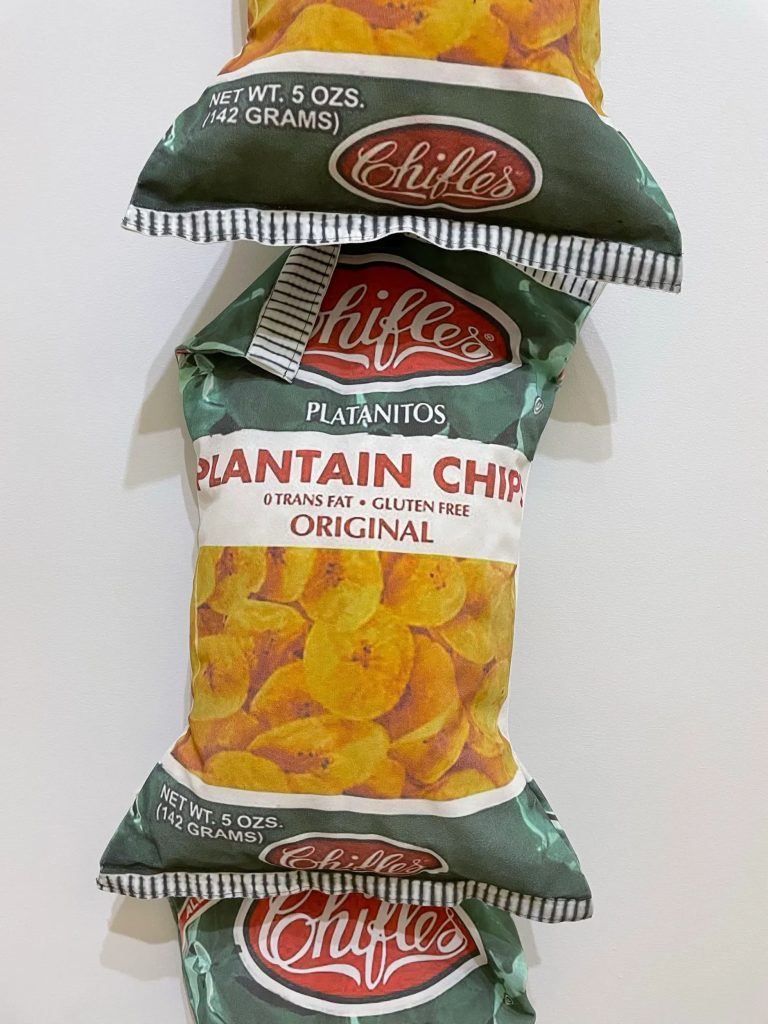
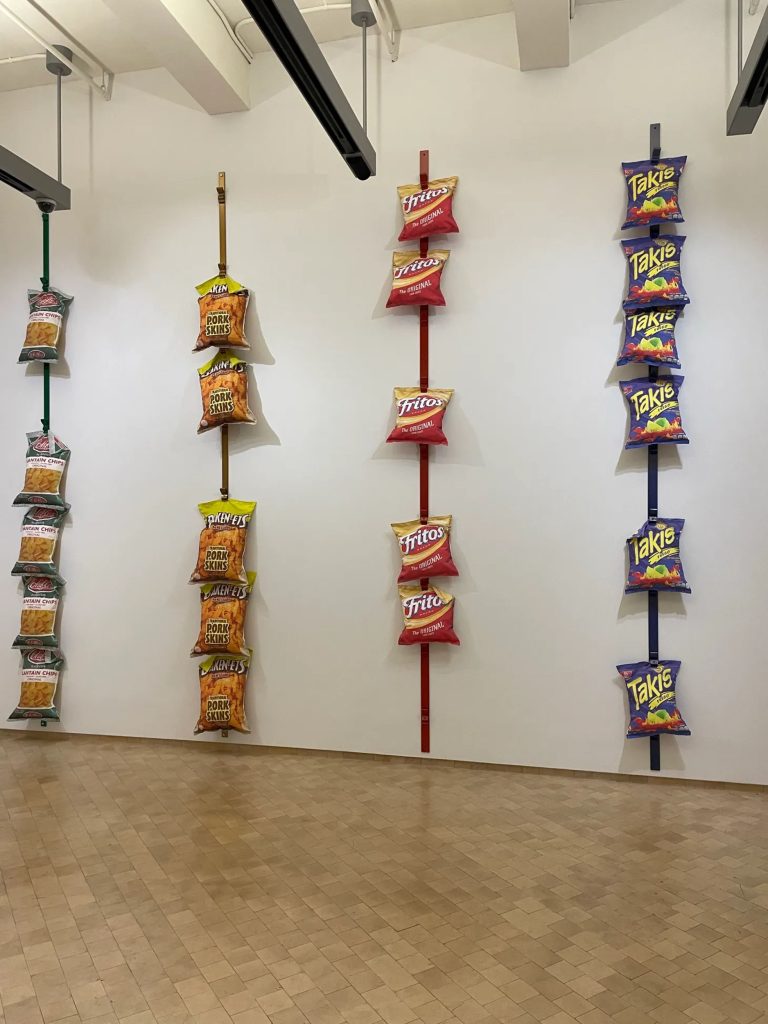
In Rack: Platanitos (2019), Lucía Hierro translates the visual language of the bodega and everyday commerce into the exhibition space through a vertical structure that recalls both a retail display and a domestic storage system. The repetition of plantain chip bags—scaled and rendered through digital print on brushed nylon, foam, and aluminum—transforms a product of immediate consumption into a serial sculptural form. Suspended in balance, the bags evoke the logic of accumulation and circulation inherent to retail environments, where food is not only consumed but also arranged, displayed, and desired.
Here, the banana appears in its processed form—converted into an industrial snack—further removed from its agricultural origin. This shift, from fruit to packaged product, foregrounds the multiple layers of mediation that shape how food circulates within global economies. Yet rather than offering a direct critique, Hierro maintains a precise attention to the object’s cultural familiarity: platanitos are a staple within Dominican diets and across diasporic contexts, functioning as an immediate sensory link to home. In this sense, the bag operates not only as container but as a recognizable sign that carries memory, consumption, and identity.
As in other works in her practice, Hierro elevates materials associated with the disposable and the commercial to a scale and presence that demand sustained attention. The repetition of the bags introduces a rhythmic dimension, where the everyday acquires formal and symbolic weight. In Rack: Platanitos, the banana becomes a compressed archive of circulation: from plantation to factory, from supermarket to hand, and from there into memory. The work insists that even the most ordinary objects contain complex histories of movement, labor, and belonging.
