


ARTIST |
Lucía Hierro |
TITLE |
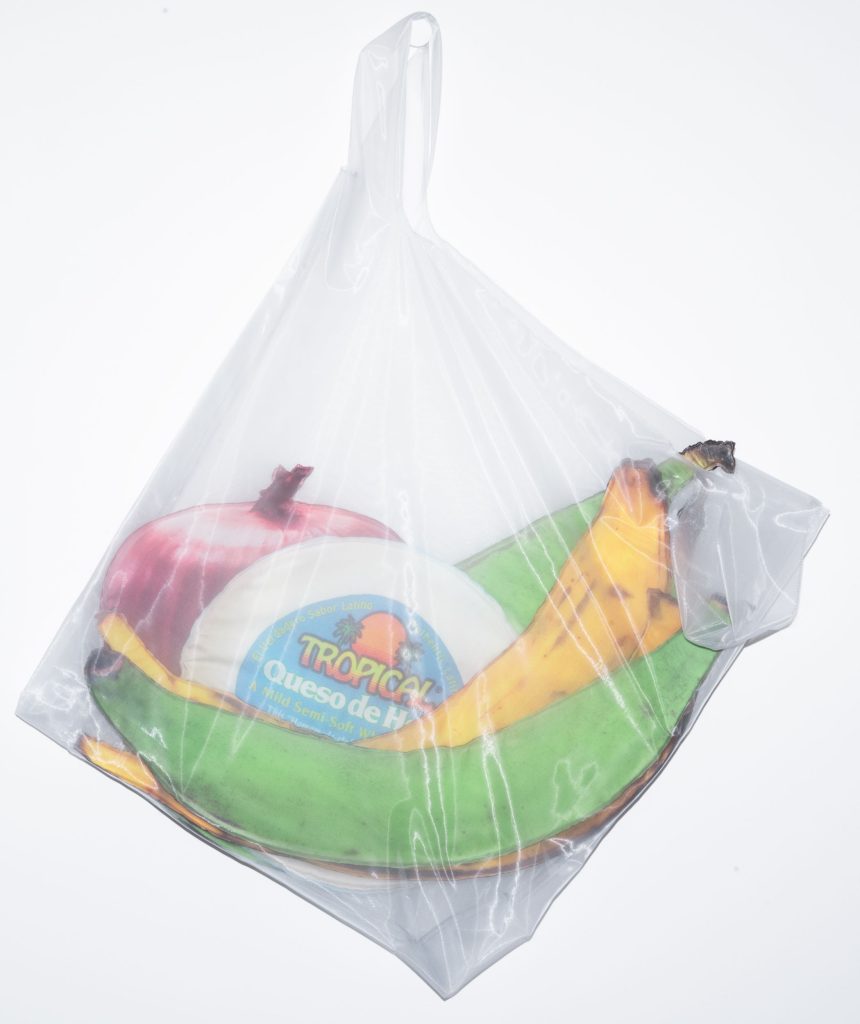
Mandaito: 4 Platano Verde, 2 Platano Maduro, Queso de Hoja, Cebolla Roja |
YEAR |
2022 |
ARTIST’S COUNTRY OF ORIGEN |
Dominican Republic, United States |
DIMENSIONS |
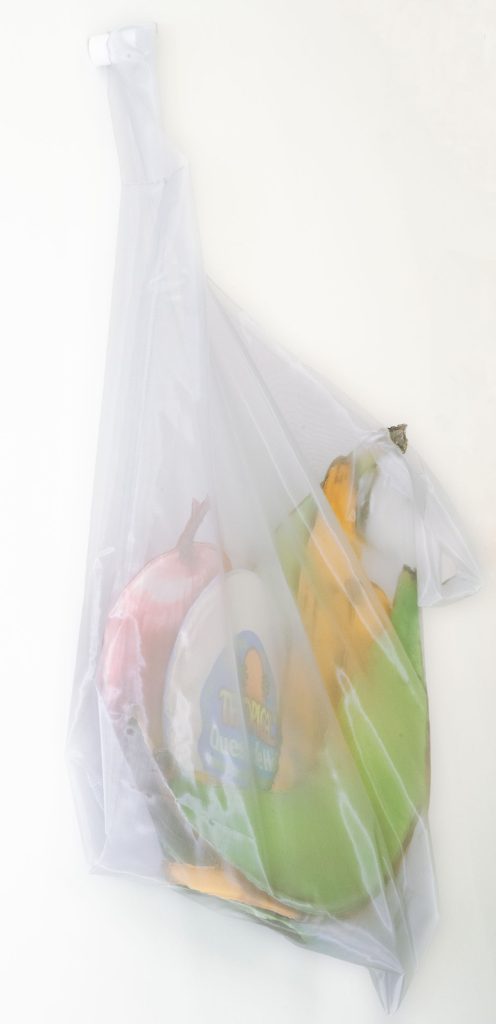
243.84 x 30.48 x 17.78 cm / 96 x 12 x 7 " |
MEDIUM |
PolyOrgandy, felt, digital print on cotton sateen, foam |
Courtesy of the artist; artist represented by Fabienne Levy Gallery
In Mandaito: 4 Plátano Verde, 2 Plátano Maduro, Queso de Hoja, Cebolla Roja (2022), Lucía Hierro once again turns to the vernacular aesthetics of the Dominican bodega to explore the cultural rituals embedded in everyday consumption. The oversized poly-organdy bag—translucent, crinkled, and instantly recognizable—elevates a handful of ordinary groceries into monumental icons of diasporic life. Inside, digitally printed plantains, cheese, and a red onion—rendered on cotton sateen and shaped with foam and felt—float as if suspended in time, a sculptural still life that celebrates the sensory anchor points of Dominican cooking. The plantains, both green and ripe, become the visual and conceptual center: markers of home, adaptability, and the layered rhythms of migration.
Like other works in the Mercado series, this piece transforms the plastic shopping bag into a symbolic container of memories, movements, and shared histories. Hierro’s selection of items reflects not nostalgia but recognition—these are the ingredients that circulate between Dominican households, New York bodegas, and the wider Afro-Caribbean diaspora. By working at an exaggerated scale, she encourages viewers to reconsider the intimacy and political charge of these foods, whose affordability and ubiquity speak to working-class realities shaped by migration, labor, and cultural continuity. In this sculptural assemblage, the banana functions as a portable archive: it carries with it the story of how people move, what they bring, and what they refuse to leave behind.
Materially, Mandaito: 4 Plátano Verde… honors the artist’s personal history while expanding the language of soft sculpture. Hierro’s choice of fabric—once tied to her family’s sewing labor—becomes an empowered medium for articulating community identity and inherited resilience. The work’s surface, at once playful and meticulous, echoes the marketing imagery of supermarkets while subverting it through touch, scale, and cultural specificity. By placing these Dominican staples at the center of the frame, Hierro foregrounds the complexity of diasporic belonging: a narrative told through groceries rather than grand monuments, through plantains rather than flags. In doing so, she affirms that the everyday objects carried home in a plastic bag can reveal the most profound truths about origin, adaptation, and collective memory.
