


ARTIST |
Lucía Hierro |
TITLE |
Cenita |
YEAR |
2023 |
ARTIST’S COUNTRY OF ORIGEN |
Dominican Republic, United States |
DIMENSIONS |
91.44 x 91.44 x 5.08 cm / 36 x 36 x 2 " |
MEDIUM |
Felt, digital print on cotton sateen, foam |
Courtesy of the artist; artist represented by Fabienne Levy Gallery
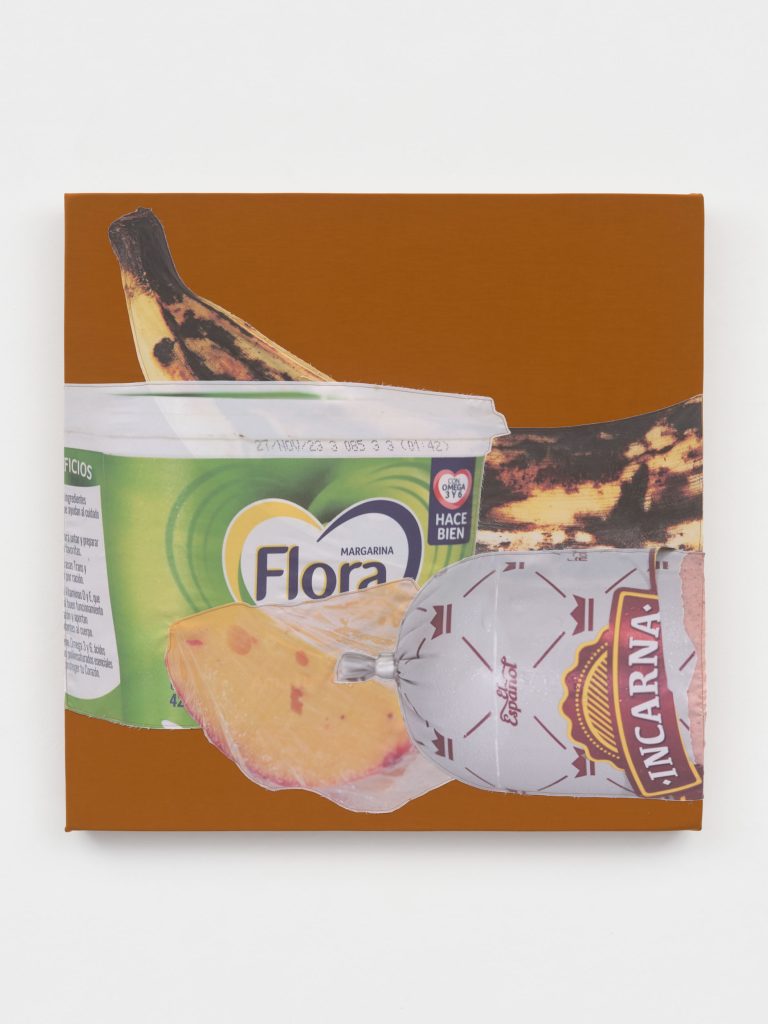
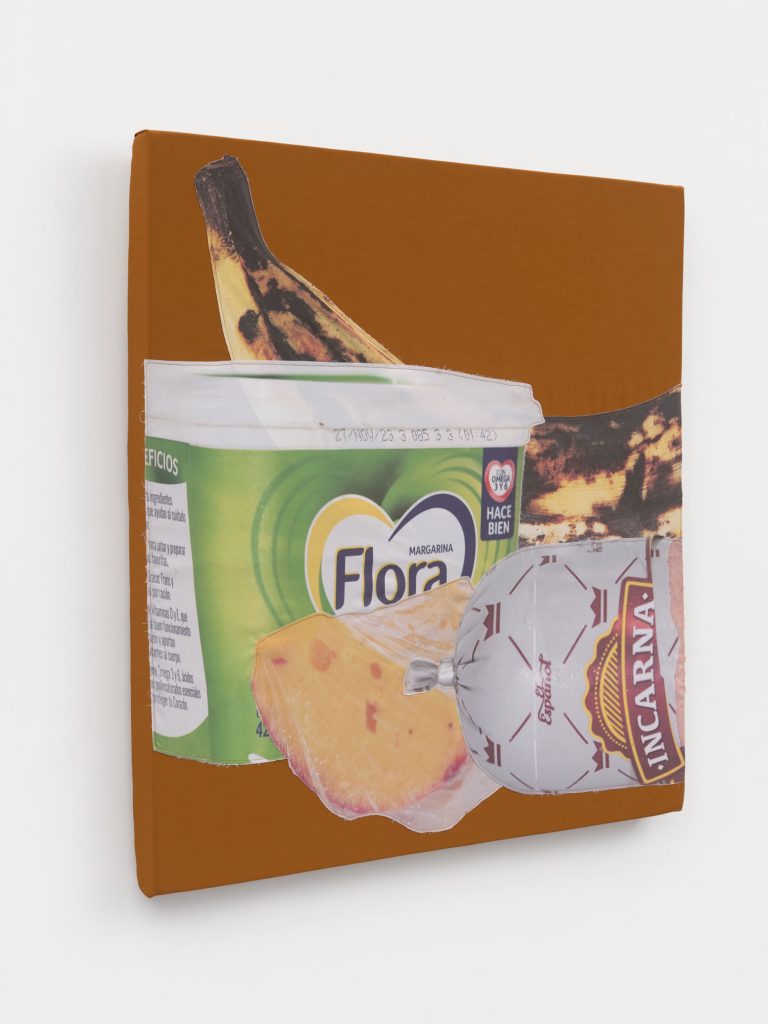
Lucía Hierro’s Cenita (2023) continues the artist’s exploration of how everyday objects become cultural portraits, especially within Dominican and Dominican-American communities. Here, instead of the clear plastic bag emblematic of her Mercado series, a framed textile panel gathers a plantain, a tub of Flora margarine, a wedge of Dominican-style Edam cheese, and a roll of salami campestre. Isolated against a warm ochre background and rendered in digitally printed cotton sateen and felt, these familiar foods take on a monumental clarity. The plantain—central to Dominican cooking and diasporic longing alike—anchors the composition, its mottled peel suggesting ripeness, domestic comfort, and the sensory memory of home kitchens.
As the title Cenita implies, the work conjures not only a set of ingredients but the intimate, improvised nature of everyday evening meals. Hierro pays careful attention to the language of food and naming; choosing Spanish for this title becomes a gesture of reclamation, one that honors Black and Indigenous reinventions of the Spanish language itself. The work draws from the artist’s memories of Dominican relatives traveling back and forth with requested food items for homesick New Yorkers—objects that became emotional stand-ins for place, belonging, and continuity. The plantain in Cenita therefore serves as both a literal ingredient and a coded reference to immigrant economies of memory, where certain foods become anchors in the ongoing construction of identity.
In its blend of scale, material, and cultural specificity, Cenita reflects Hierro’s broader interest in how marketing imagery shapes diasporic selfhood. The foods depicted here carry within them the intertwined histories of the Dominican Republic, Haiti, and the Afro-Atlantic world, as well as the everyday realities of Dominican communities in New York. Just as importantly, the use of fabric—a medium the artist once resisted due to its associations with her family’s labor in garment factories—becomes an act of empowerment. By elevating soft materials into the realm of fine art, Hierro reclaims a narrative of labor, aspiration, and survival. In Cenita, the plantain becomes a symbol of what endures across borders: a story not of what was lost, but of what remains.
