


ARTIST |
Glorianna Ximendaz |
TITLE |
Peel it Good |
YEAR |
2025 - ongoing |
ARTIST’S COUNTRY OF ORIGEN |
Costa Rica |
DIMENSIONS |
Variable dimensions |
MEDIUM |
Mixed media layered over modified archival material, digital photography, digital video |
Courtesy of the artist
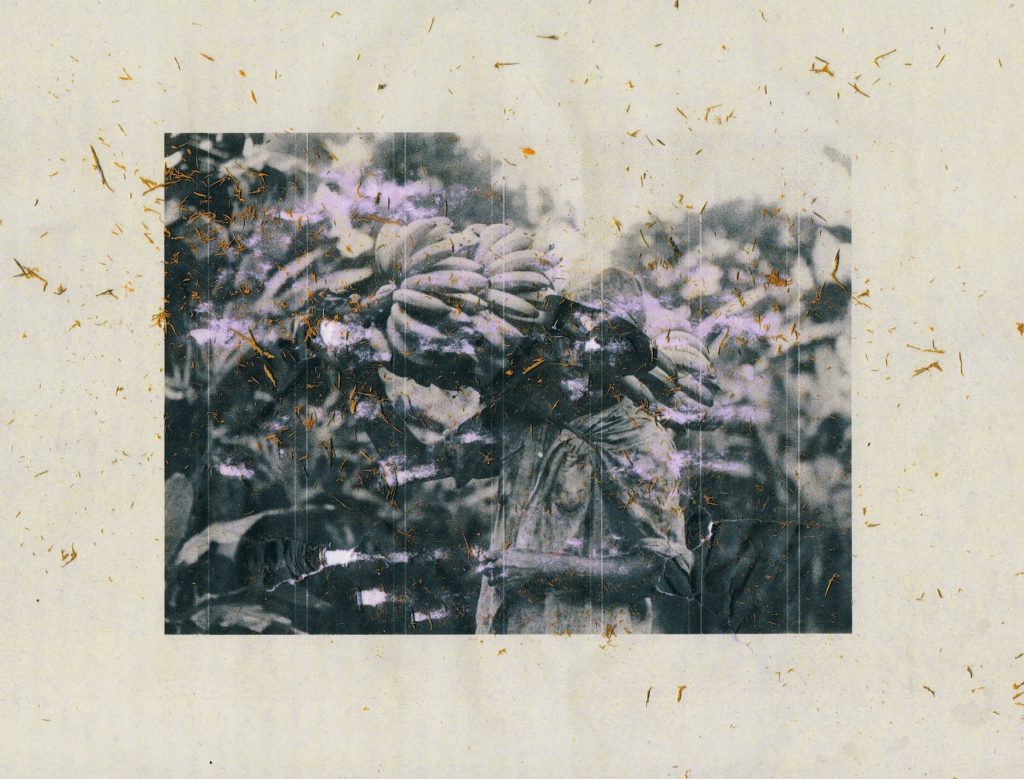
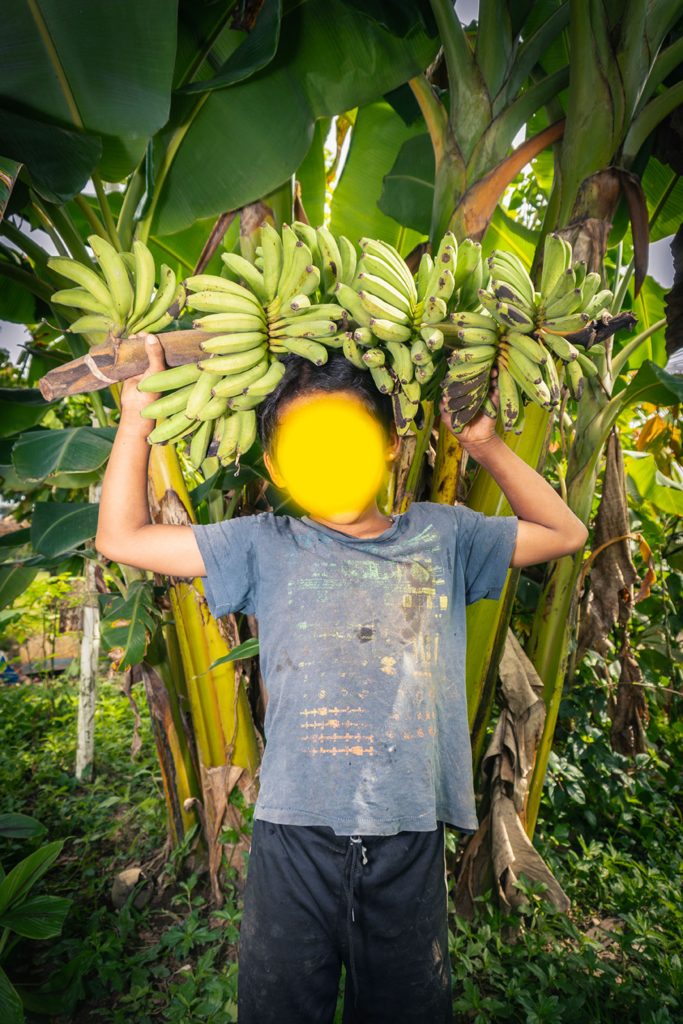
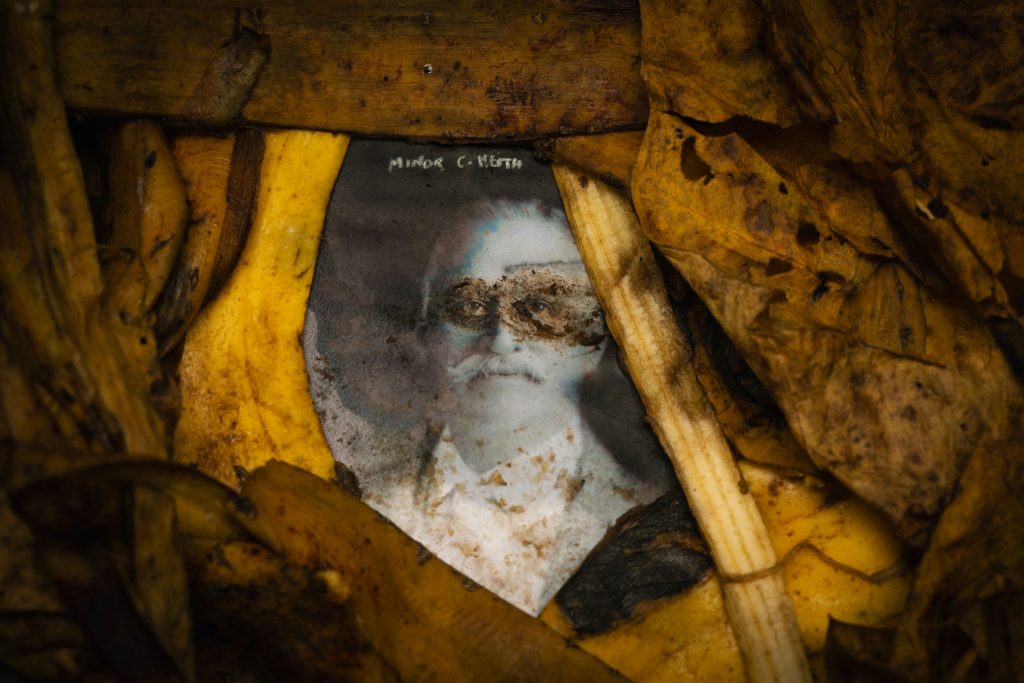
In Peel it Good (2025 - ongoing) (2025–ongoing), Glorianna Ximendaz develops a multidisciplinary project that brings together photography, archival material, and its material intervention to expose the human cost concealed beneath the polished surface of the global banana trade. Drawing on historical documents and contemporary records of plantation workers—particularly in Sixaola, Costa Rica—the artist constructs layered compositions in which past and present become entangled. These images, fragmented by traces of decay, organic matter, and processes of intervention, operate as visual palimpsests where history is not only remembered but appears to decompose and reactivate simultaneously.
The intervention of the archive is central to the work: Ximendaz activates it as a living organism. By applying agrochemicals sourced from the banana industry itself onto the archival supports, the paper reacts—staining, weakening, breaking—becoming a sensitive surface that registers the violence it documents. In this process, the archive ceases to function as a neutral record and instead acquires corporeal qualities: it absorbs sweat, evokes blood, and embodies the material conditions of the bodies that labor the land. This material dimension opens a chain of questions that exceed the image: if the archive reacts, what happens to the skin? To the bodies exposed daily to these compounds? To the childhoods shaped by this invisible contact?
The project extends into the present through the collection of images and videos of banana workers on digital platforms such as TikTok, where dynamics of exploitation—rooted in Taylorism and in contemporary forms of slavery—are choreographed, aestheticized, and circulated as content. Ximendaz thus situates the industry within a visual regime in which structural violence is transformed into spectacle and symbolic commodity. In this context, the banana functions as a critical metonymy of the system: an everyday object that condenses circuits of production, circulation, and consumption marked by the invisibilization of labor and chemical exposure.
Inherited Injustices ultimately unfolds as an “expanded exhibition” that integrates historical archive, material intervention, contemporary production, performance, and a fanzine publication. The project’s forthcoming website will bring these elements together as an open, accessible archive, constructed through community, research, and artistic practice. Rather than fixing memory, the work proposes a space in which images continue to act, projecting questions into the future and demanding an ethics of viewing capable of recognizing the intertwined histories of exploitation and resistance embedded in each image—and in each fruit.
