


ARTIST |
Ana Nuñez Rodriguez |
TITLE |
Hoja Bandera |
YEAR |
2023 |
ARTIST’S COUNTRY OF ORIGEN |
Spain, Colombia |
DIMENSIONS |
Two parts; each 22 x 17 cm / 8.66 x 6.69 " |
MEDIUM |
Left side: Serigraphy. Right side: 1 Ink offset print. Binding: Stitched to the saddle with threat |
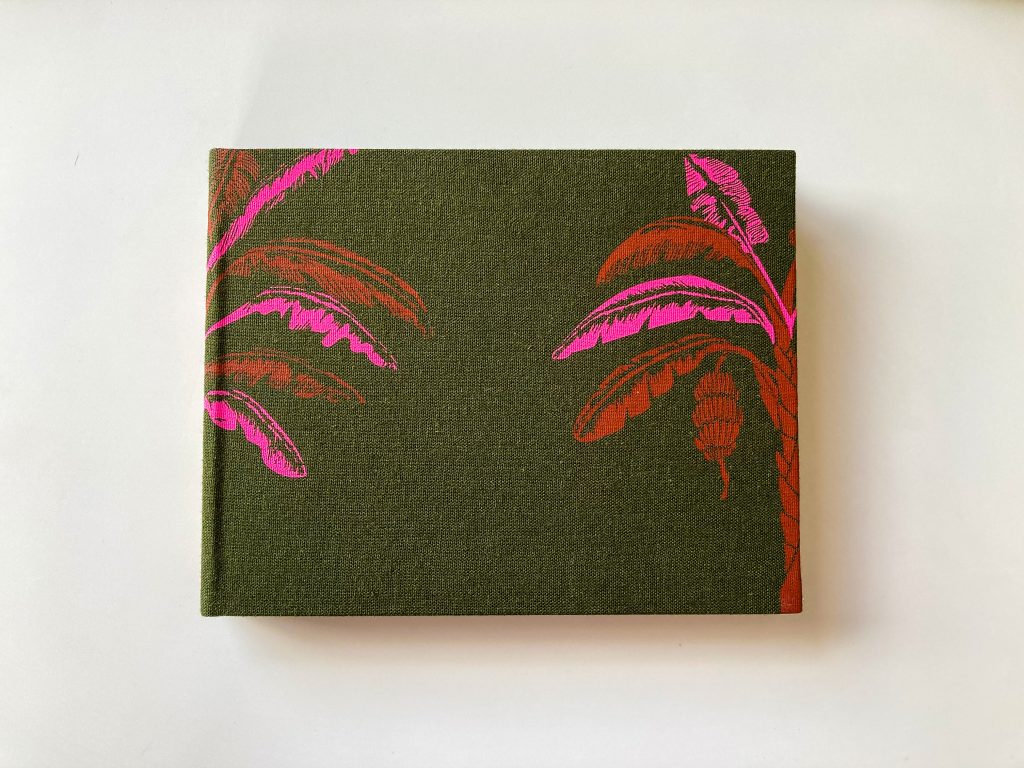
Publisher: Simulacro Ediciones. Author: Ana Nuñez Rodriguez. Editor: Ana Nuñez Rodriguez. Drawings: Laura María Oliveros Sánchez. Creative consulting: Sebastián Sandoval Quimbayo
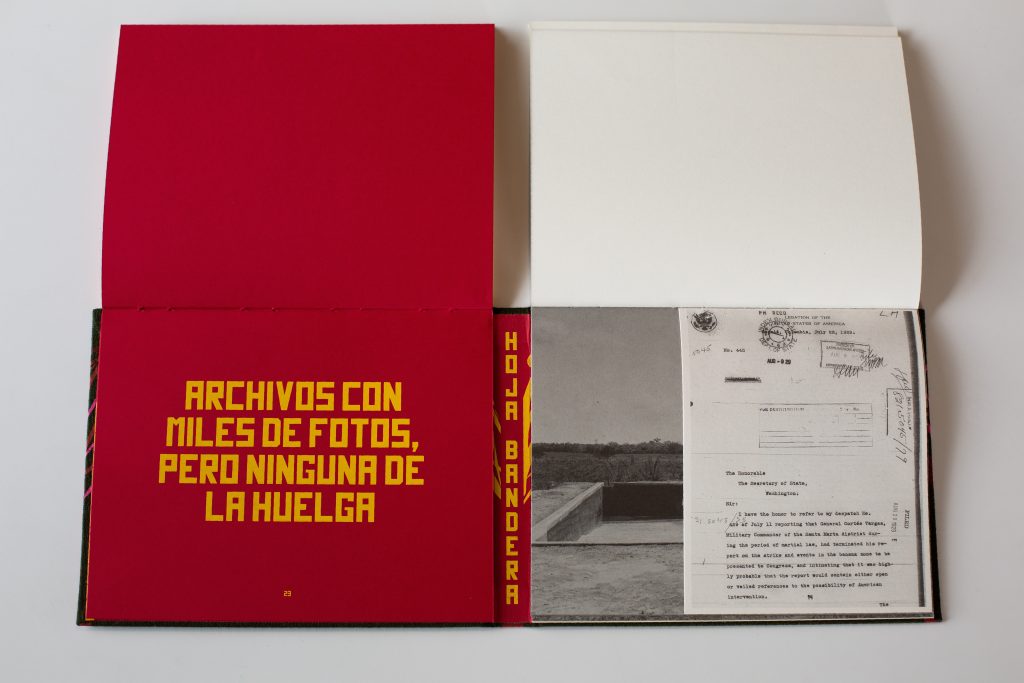
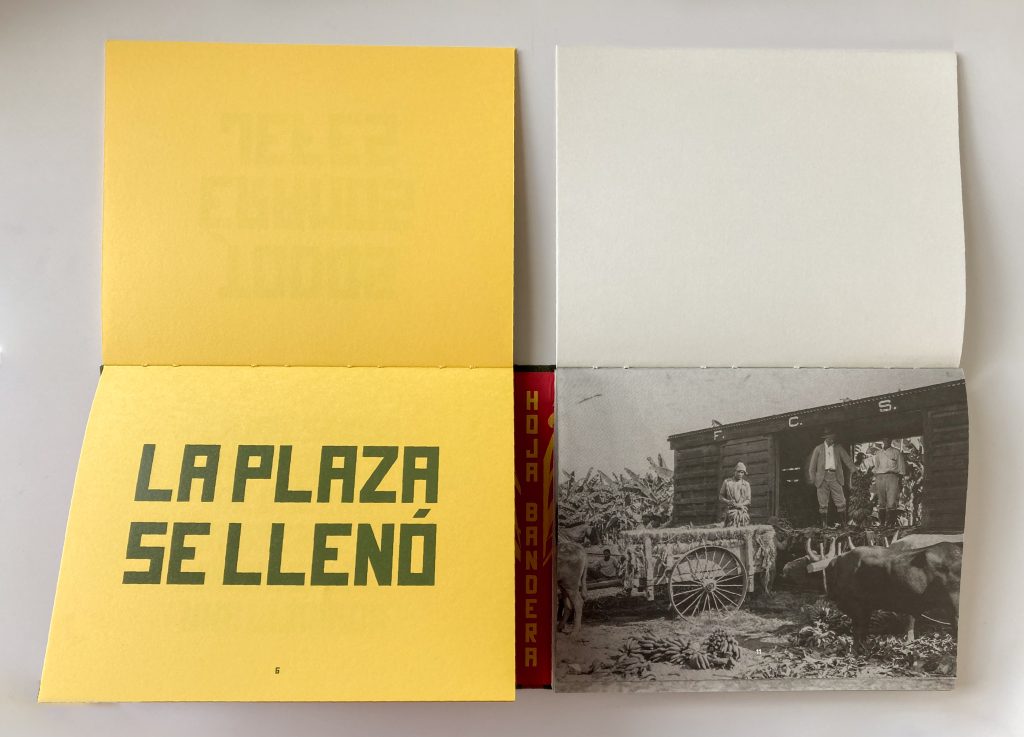
In Hoja Bandera (2023), Ana Nuñez Rodríguez revisits the legacy of the 1928 Banana Massacre through the delicate and deliberate format of an artist’s book. Drawing on the photographic archives of the United Fruit Company and on testimonies compiled by labor leader Carlos Arango, the work constructs a fragmentary counter-memory of one of Colombia’s most emblematic episodes of labor repression. Through its stitched binding and juxtaposed pages—serigraphy on one side, offset print on the other—the publication materializes the tension between official record and lived experience, between the visual language of corporate modernity and the silenced narratives of workers’ resistance.
The title, Hoja Bandera (“Leaf Flag”), expands the metaphor of the banana plant itself: the last leaf that rises from the stem, positioned to absorb the most light and distribute it through the organism. In the same way, the líder or lideresabecomes the point of exposure, mediating between collective struggle and the oppressive system that seeks to contain it. By transforming this botanical metaphor into a political emblem, Núñez Rodríguez aligns ecological growth with social mobilization, re-situating the banana plant as both witness and participant in Colombia’s history of extractivism and violence.
Through its pamphlet-like design and dense layering of image and text, Hoja Bandera reclaims the visual rhetoric of propaganda to evoke what is missing from the photographic record—the images that could never be taken or were deliberately erased. The result is an act of repair: a reconstruction of visual and political memory that unfolds page by page, asking how print can become a site of testimony and resistance.
