


ARTIST |
Kosisochukwu Nnebe |
TITLE |
A Palimpsest for the Tongue |
YEAR |
2024-2025 |
ARTIST’S COUNTRY OF ORIGEN |
Canada, Nigeria |
DIMENSIONS |
Variable dimensions |
MEDIUM |
Chlorophyll prints on banana leaves, steel, acrylic |
Courtesy of the artist with the support from Women Photographers International Archive (WOPHA), Miami
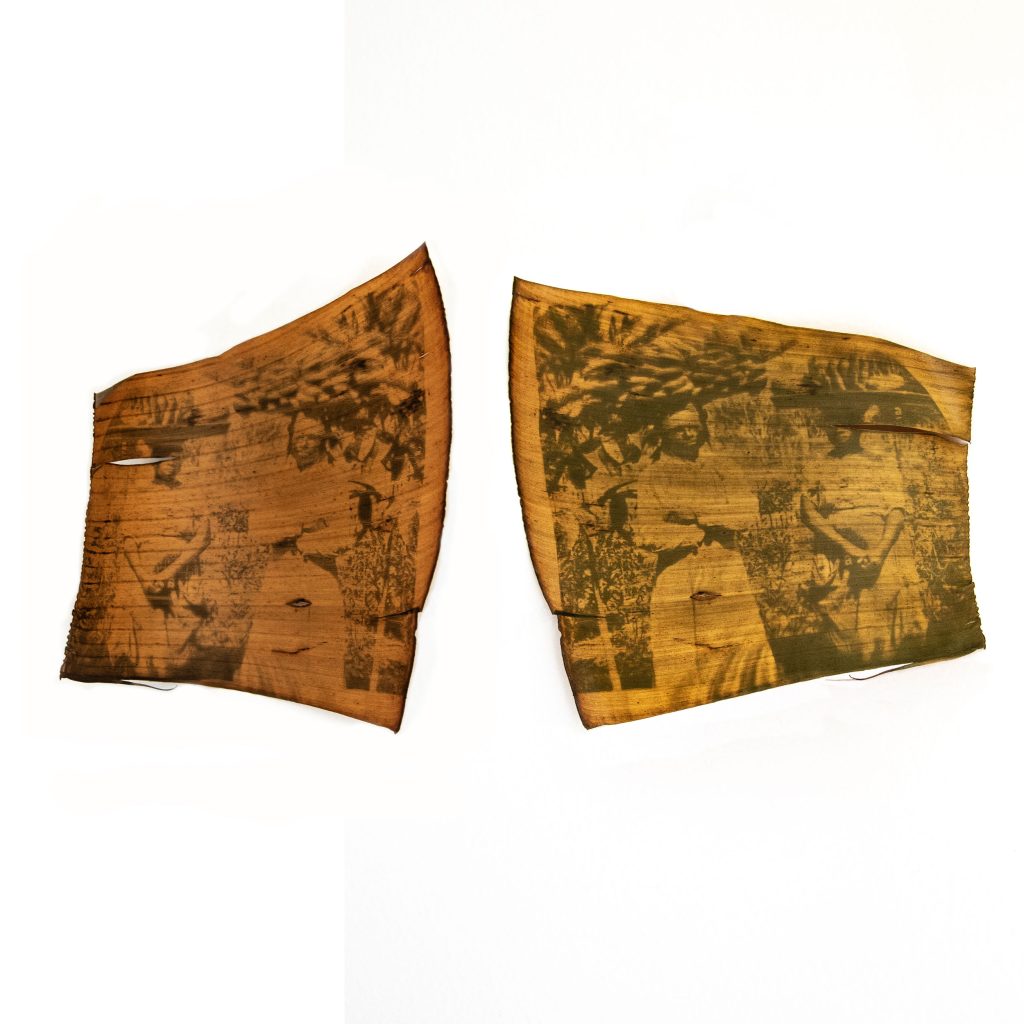
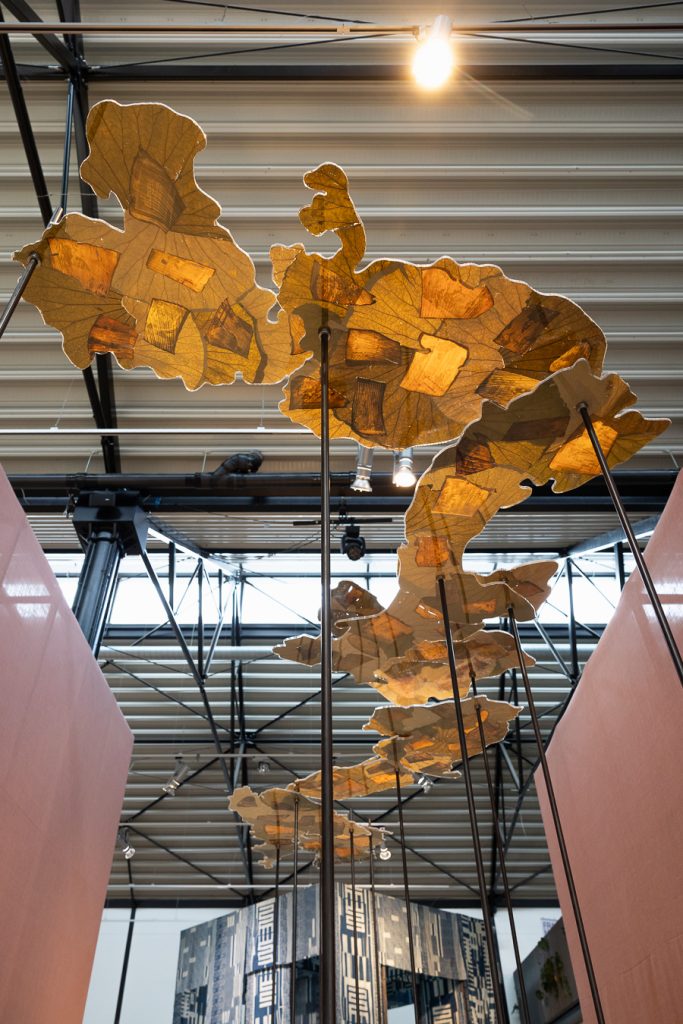
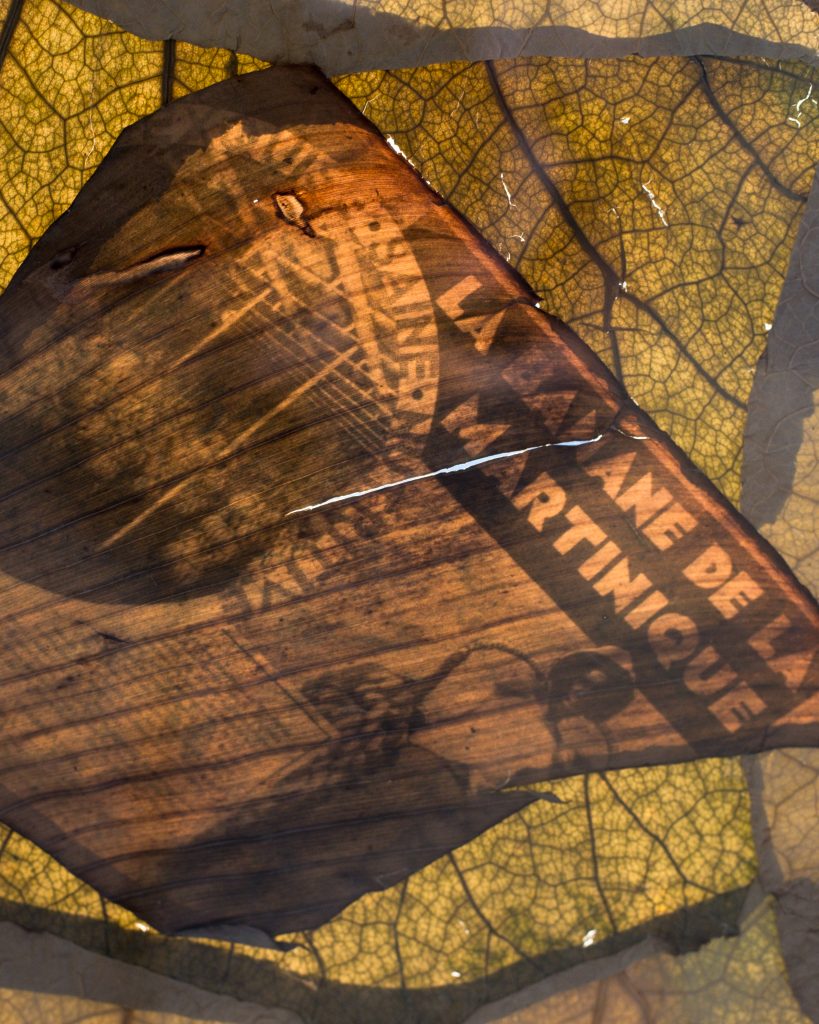
In A Palimpsest for the Tongue (2024-2025) (2024–2025), Kosisochukwu Nnebe reconfigures the banana leaf as both surface and agent of inscription. Through chlorophyll printing—a process in which sunlight and photosynthesis produce images directly onto living plant matter—the leaf becomes a sensitive, time-bound archive. The banana, here, is not merely depicted but materially activated: its organic processes register traces of human intervention, rendering visible a layered history that is at once botanical and political. As the images slowly fade and transform, the work foregrounds the instability of the archive and the impossibility of fixing the banana’s meanings within a single narrative.
Nnebe’s use of the banana leaf as a photosensitive substrate draws attention to the plant’s entanglement with histories of racial capitalism, migration, and colonial extraction. The banana emerges as a carrier of memory—one that holds within its fibers the residues of plantation economies and their afterlives. Yet this archive resists legibility at first glance: the images are only fully perceptible beneath a canopy of leaves, invoking embodied encounters with banana groves and situating knowledge within lived, sensory experience. In this way, the work challenges dominant modes of seeing and knowing, proposing instead a relational and situated understanding of the banana’s cultural and historical significance.
By mobilizing the banana as both medium and metaphor, A Palimpsest for the Tongue articulates a counter-archive that privileges intimacy, opacity, and transformation. The plant’s capacity to record and erase simultaneously becomes a powerful figure for the ways histories of Blackness are written, obscured, and reactivated. Nnebe’s work ultimately positions the banana not as a static symbol of exploitation, but as a living, dynamic site through which alternative histories can be sensed, remembered, and reimagined.
