


ARTIST |
Kathia St. Hilaire |
TITLE |
Caco series (Charlemagne Péralte, Benoît Batraville, and Rosalvo Bobo) |
YEAR |
2023 |
ARTIST’S COUNTRY OF ORIGEN |
Haiti, USA |
DIMENSIONS |
Charlemagne Péralte: 139.7 x 159.4 cm / 55 x 62.75 ". Benoît Batraville: 141 x 161.3 cm / 55.5 x 63.5 ". Rosalvo Bobo: 142.2 x 158.8 cm / 56 x 62.5 " |
MEDIUM |
Oil based relief on canvas collage with skin lightening cream, steel, aluminium, banknotes, banana stickers, silkscreen, and tires |
Courtesy of the Artist and Perrotin. Photographer: Guillaume Ziccarelli
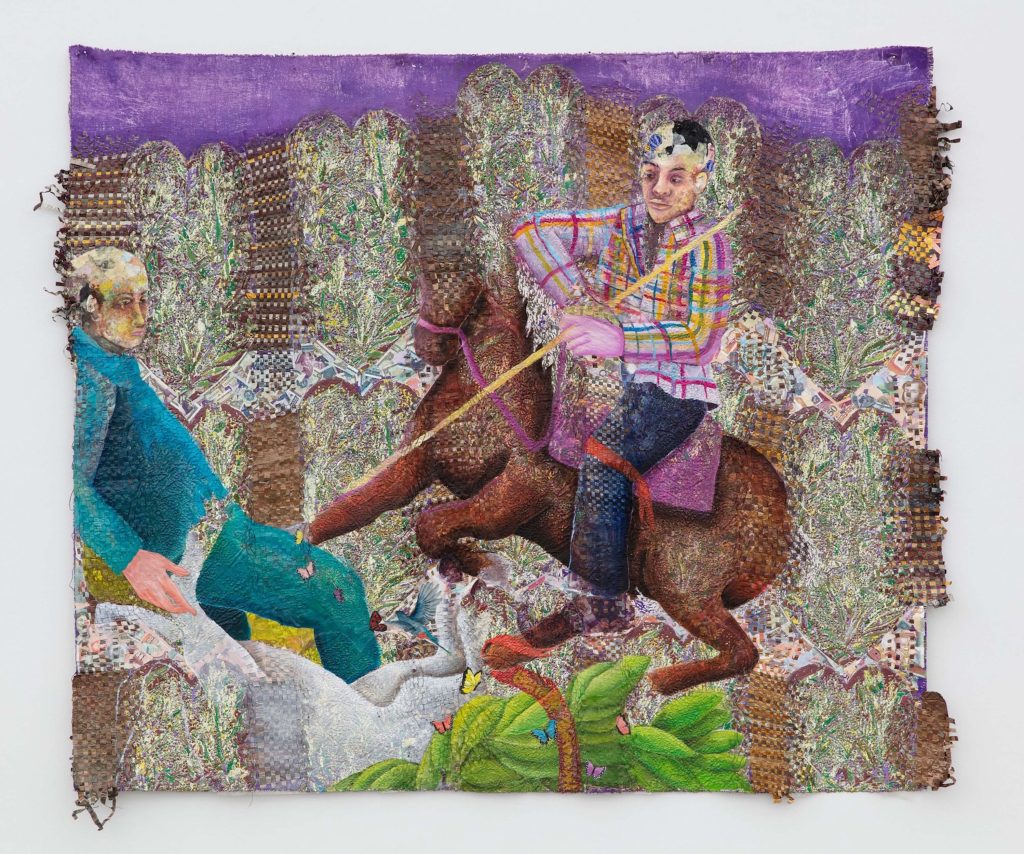
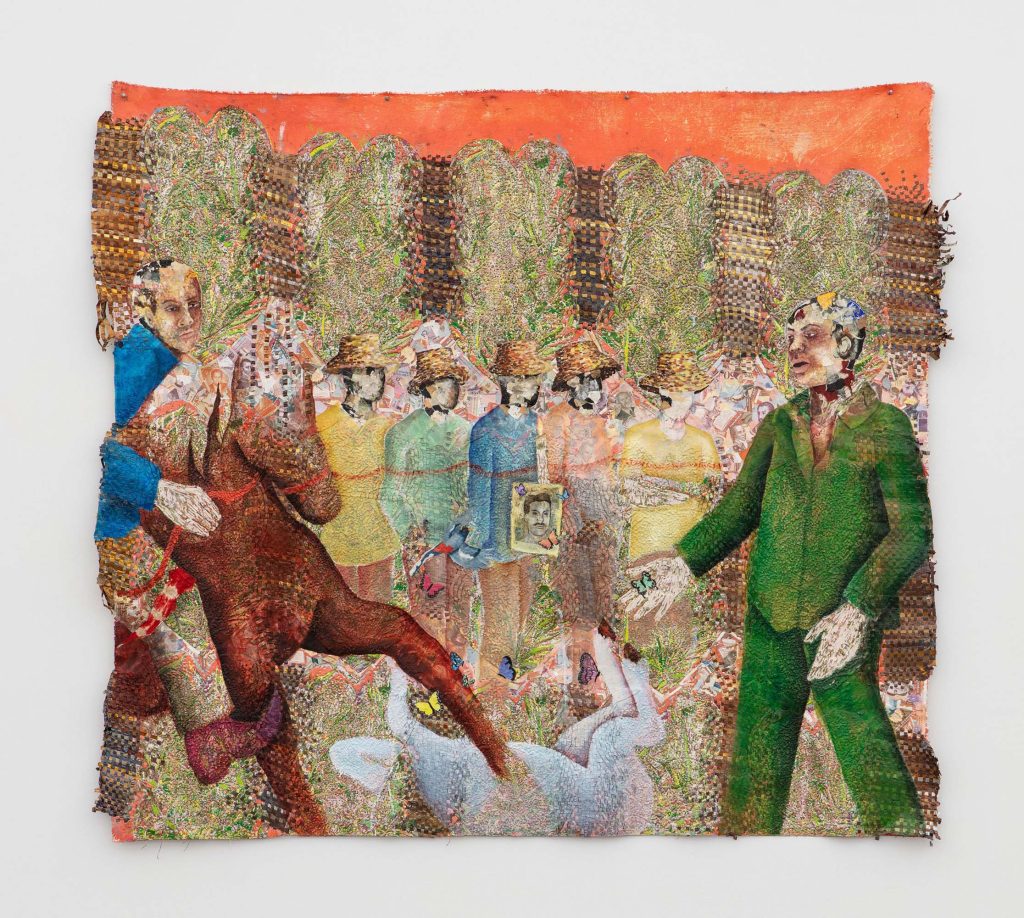
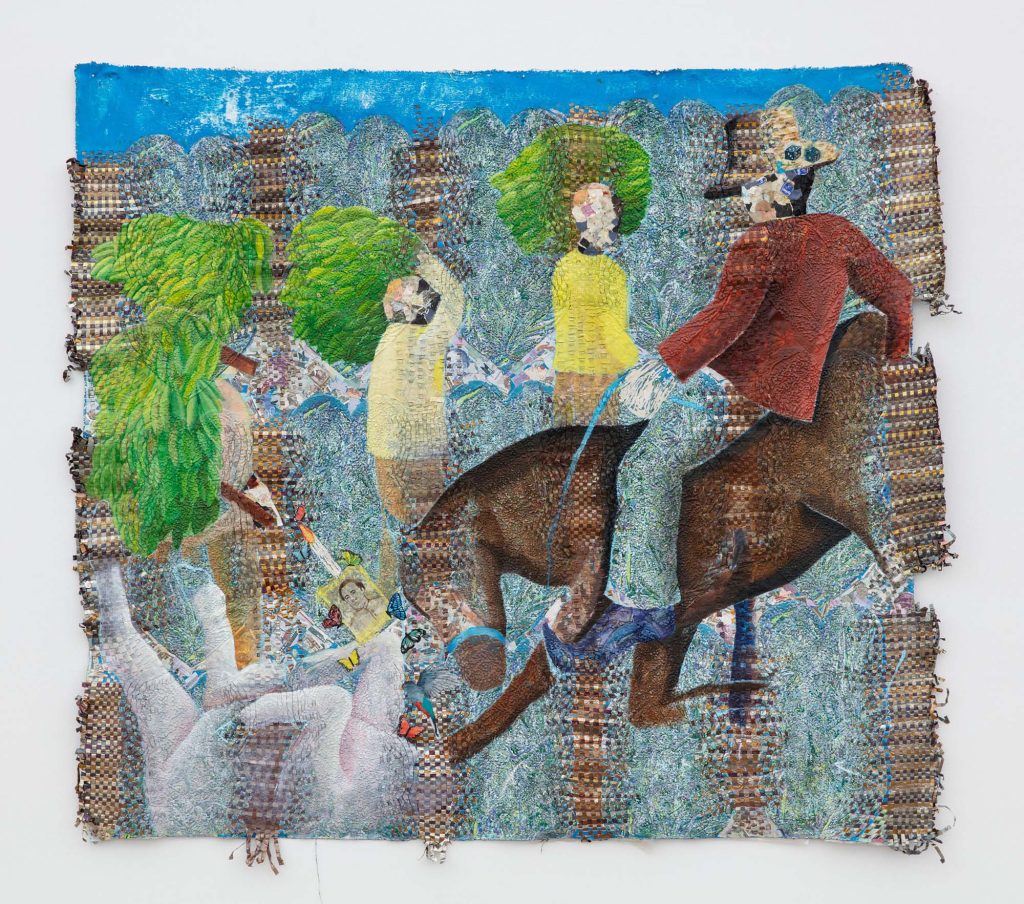
Kathia St. Hilaire’s Caco series brings Haiti’s anti-occupation resistance into vivid, tactile presence through a visual language that is as politically charged as the histories it revisits. The three works—each depicting a Caco leader mounted on a horse above a fallen white steed—animate a scene where conflict, memory, and national mythology collide. Built through dense strata of relief impressions, stitching, collage, and woven fragments, the surfaces echo ceremonial drapo and handcrafted vernacular textiles, underscoring the vitality of popular aesthetics in shaping Haiti’s cultural and political imagination. Rather than offering a single, authoritative version of history, St. Hilaire constructs a terrain of simultaneity: past and present, trauma and sovereignty, violence and reverence coexist in shifting, layered forms.
As in much of Banana Craze’s corpus, the recurring presence of bananas anchors the work within the hemispheric circuits of plantation economies and foreign intervention. Vibrant green bunches appear at the feet of fighters; workers move banana loads across the background; commercial banana stickers from Chiquita pepper the collage’s surface. These elements do more than situate Haiti in the geography of the Caribbean plantation system—they expose the intertwined legacies of U.S. imperial policy, corporate agro-industry, and the racialized labor structures that continue to shape daily life. St. Hilaire’s use of skin-lightening cream packaging, banknotes, metal, and tire rubber heightens this critique: the very materials that impose economic, cosmetic, and infrastructural pressures on Black communities become the substance from which national history is reassembled.
Across the series, mirrored counterpart paintings—with titles that flip names in reverse—further complicate the viewer’s sense of historical certainty, recalling the cyclical temporalities of Gabriel García Márquez’s magical realism. Through these subtle doublings, the works point to how stories of resistance are remembered, distorted, or lost, especially those of working-class fighters whose contributions rarely appear in written archives. St. Hilaire renders their presence monumental but never fixed; we see them through the prism of the very forces that sought to suppress their histories. By fusing material critique with narrative reconstruction, the Caco series becomes a poignant testament to Haiti’s ongoing struggles for self-definition—and a powerful reminder that the politics of the banana, from plantation to sticker, remains inseparable from the politics of resistance.
